Common Diurnal Raptors of Illinois

I was born and raised in Illinois, about 40 miles west of Chicago in a town along the Fox River. An area rich with wildlife. Coyotes, deer, foxes, possums, skunks, and raccoons aren’t too hard to find. There’s a generous variety of fish in the river. Bass (large mouth and small), catfish (channel and flathead) musky, bluegill, pike.  And as for the birds, with our agricultural land and prairie remnants and forests many species can be found. 

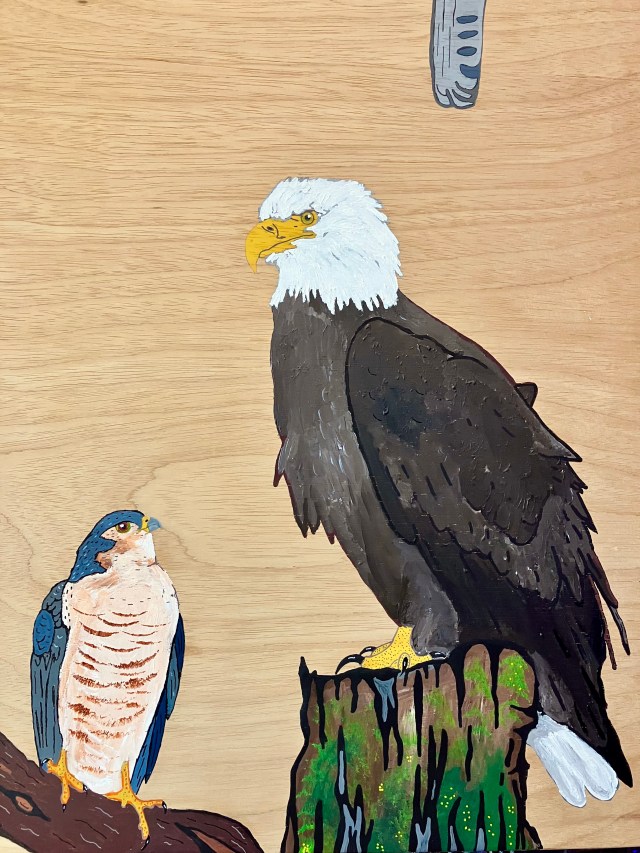
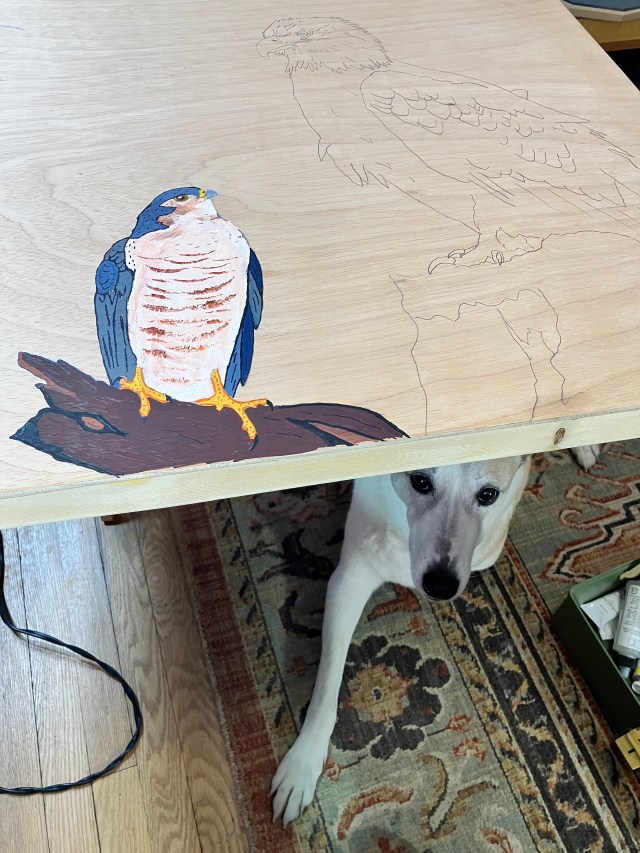
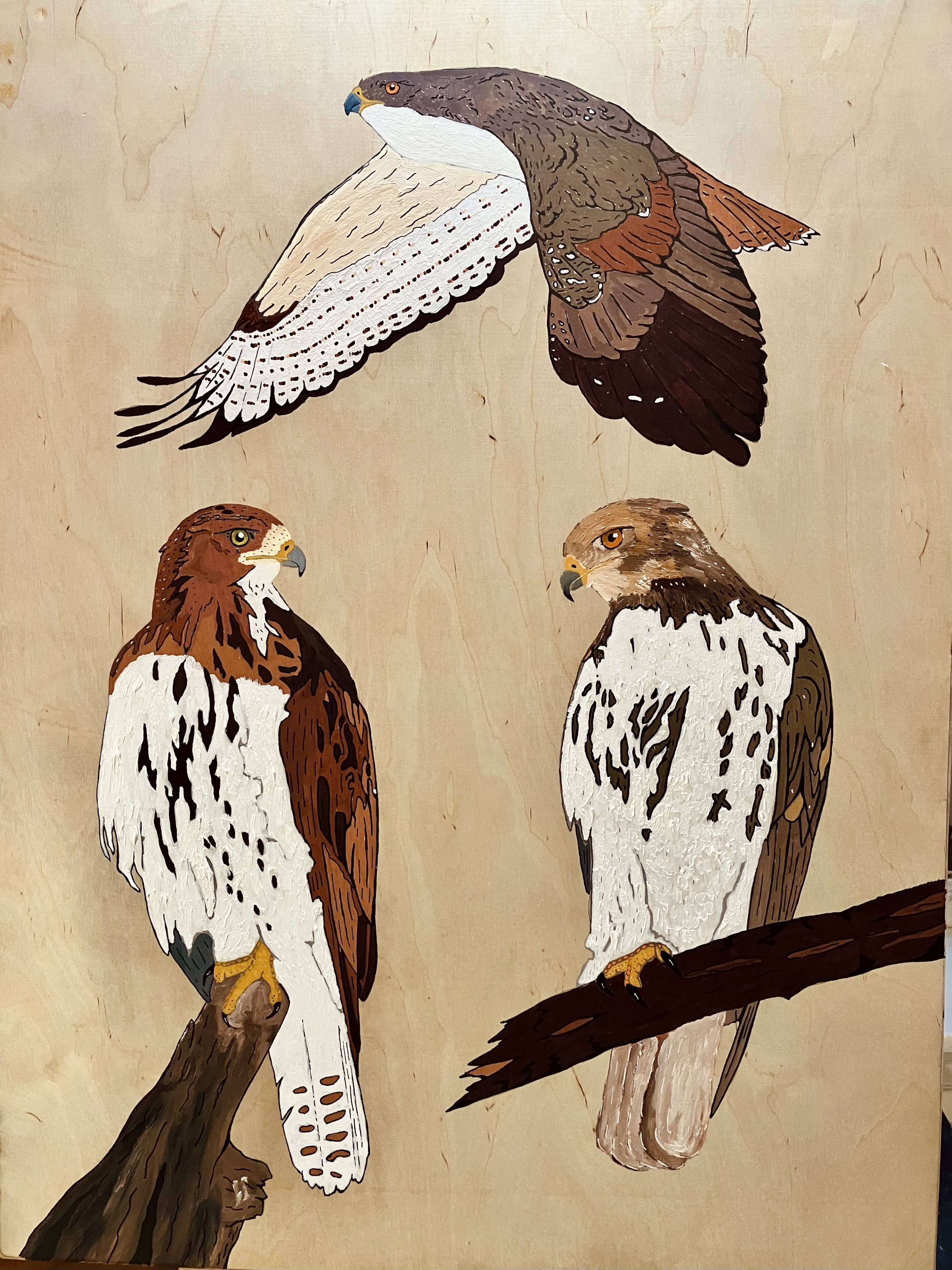
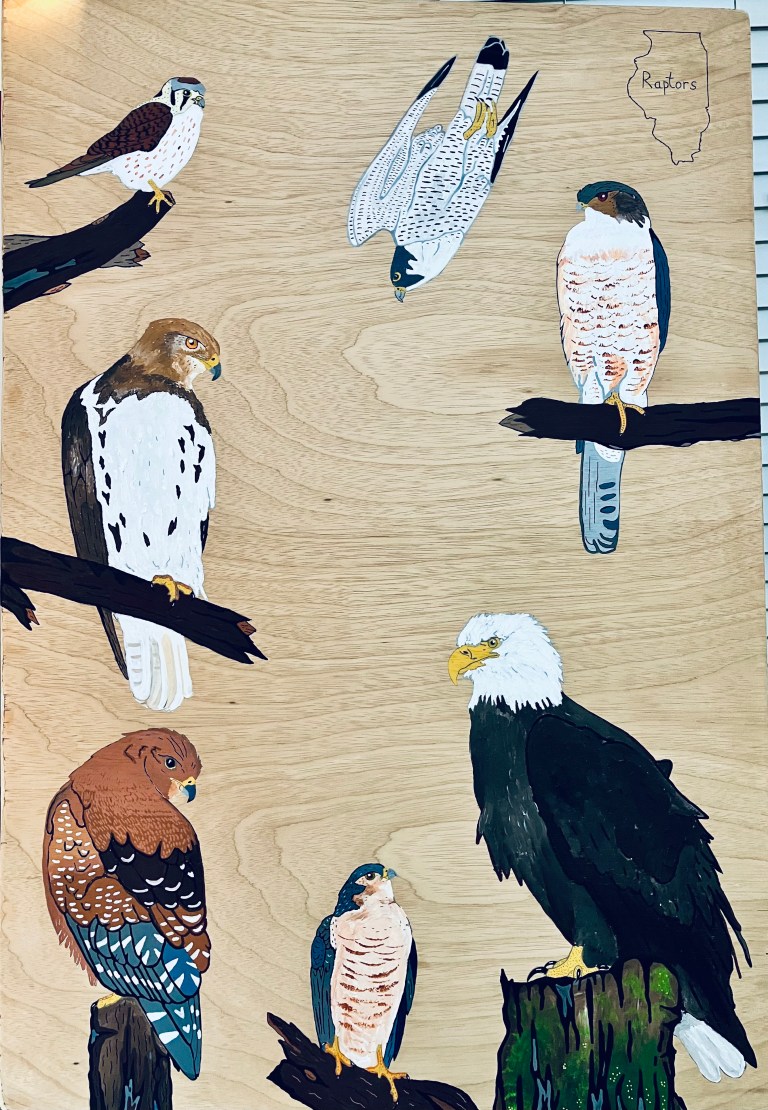
With this new panel project, I wanted to share the most common species of raptors. These seven species are the most common birds of prey that can be found in Illinois. I will say that Osprey should be included in this group, but I was limited in space in this composition even though it’s one of my largest panels. 

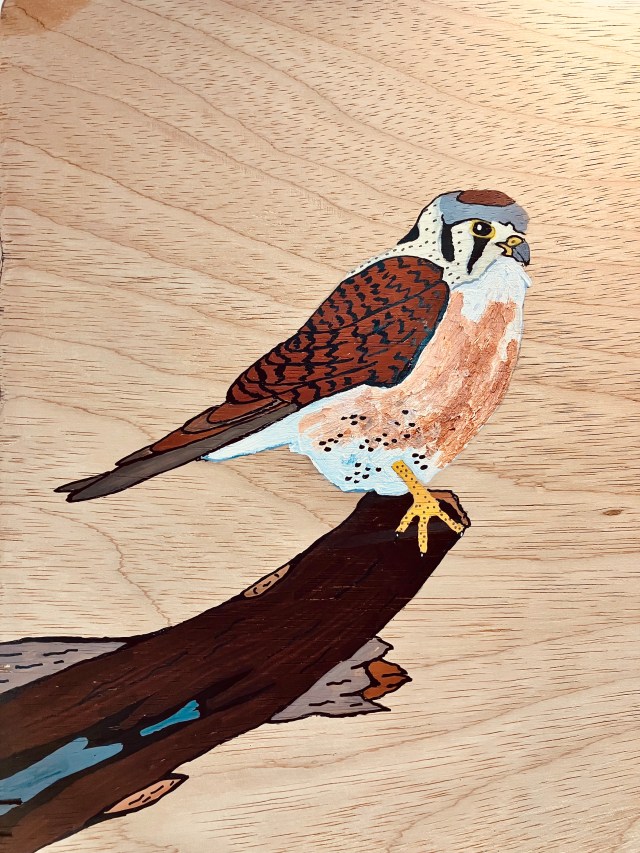
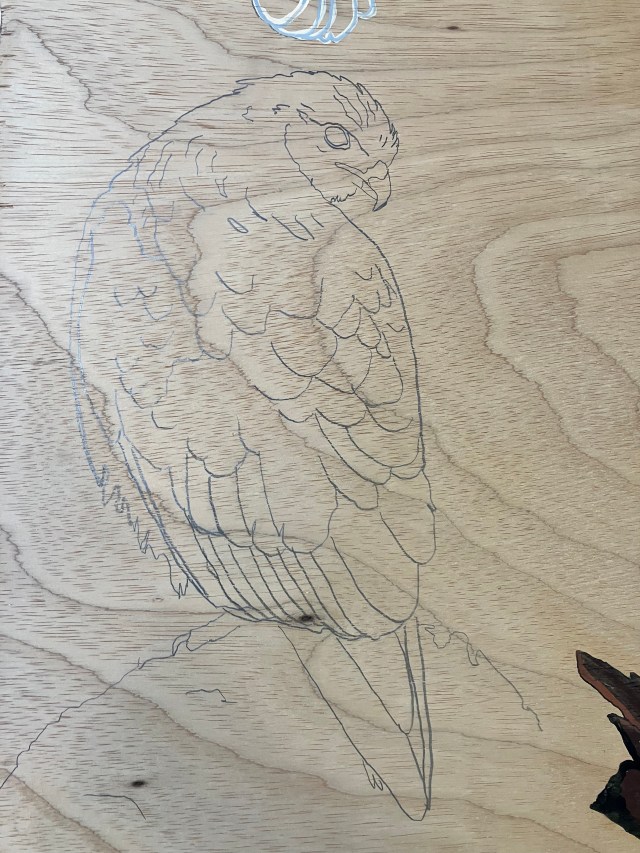
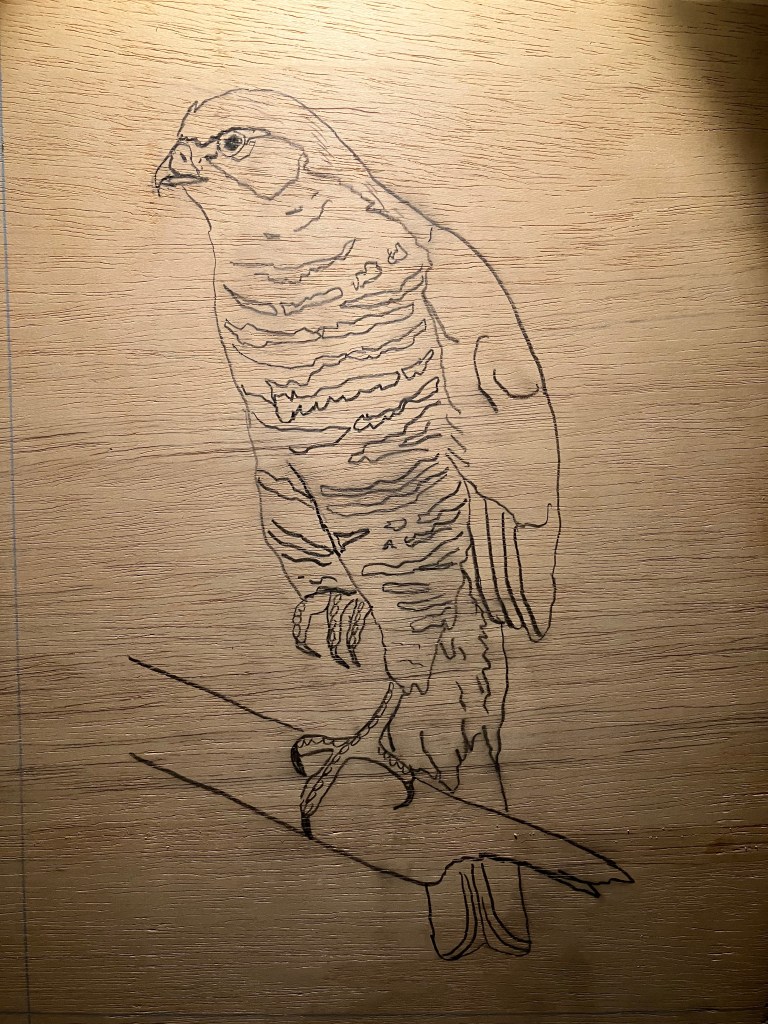
Going clockwise starting at the top: Peregrine Falcon (Falco peregrinus) in a full stoop. Cooper’s Hawk (Astur cooperii) perched on a branch. Bald Eagle (Haliaeetus leucocephalus) perched on a stump. Sharp-shinned Hawk (Accipiter striatus) giving the eagle a stern glare. Red-shouldered Hawk (Buteo lineatus) looking over its shoulder at you. Red-tailed Hawk (Buteo jamaicensis) perched on a branch. And last the small but mighty American Kestrel (Falco sparverius). 

Thank you for looking at birds with me. 

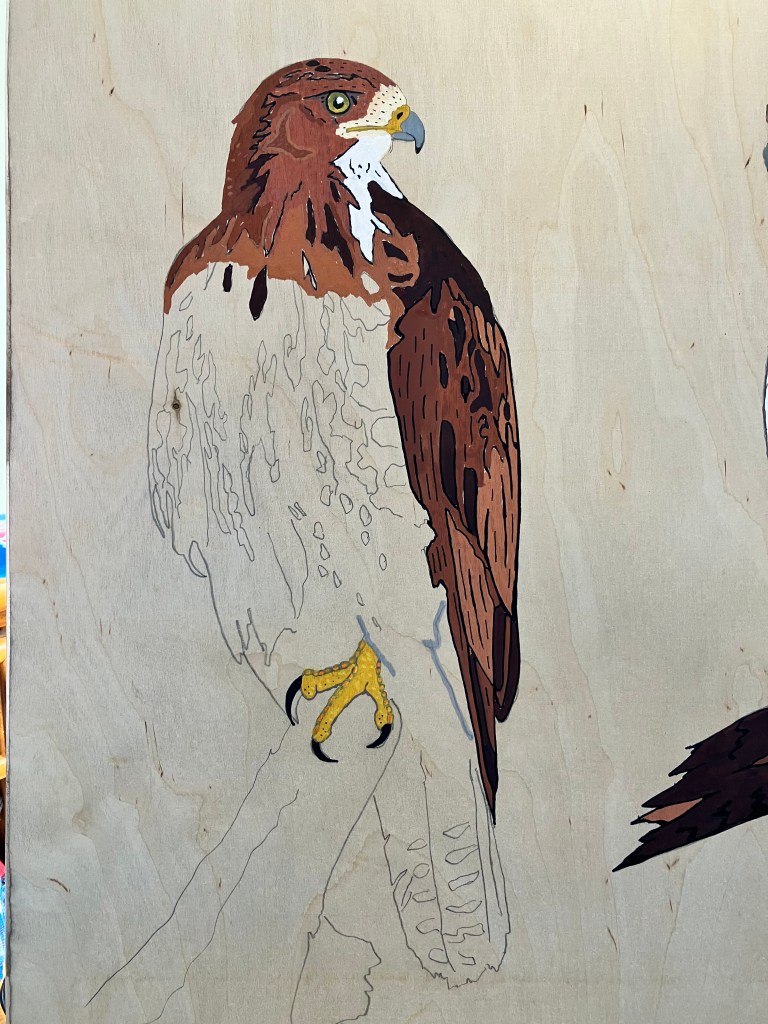
Red-Tailed Hawk

North America’s most widespread bird of prey. And easily the most represented species in my art portfolio. 

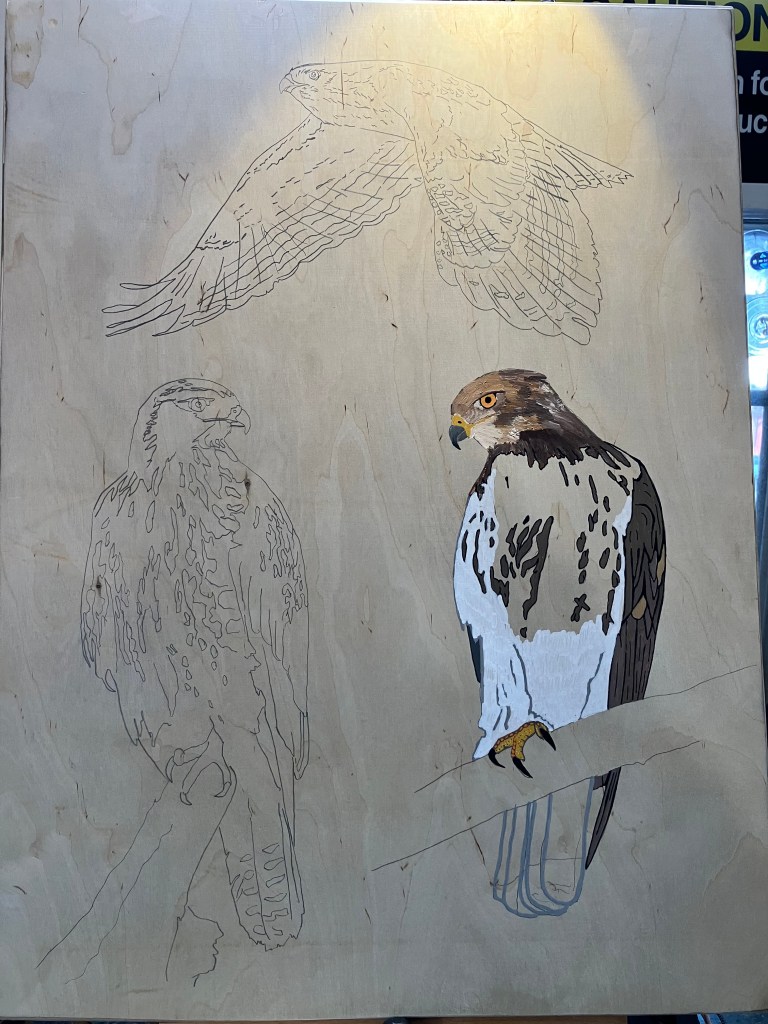
After finishing the Cooper’s hawk panel I wanted to put together something similar for the Red-tailed Hawk. 

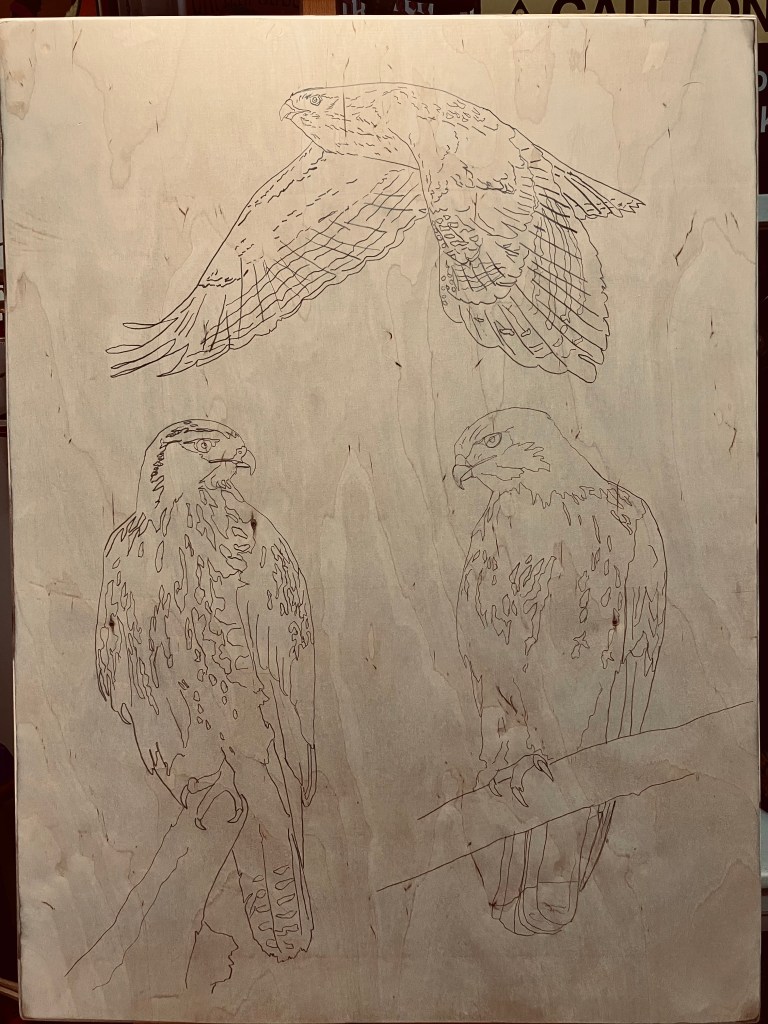
Using pencil, acrylic paint and acrylic paint markers. I made this panel from scraps I picked up at various construction sites from my work. 

The composition was inspired by wildlife illustrations found in field guides from the 1970s and early 1980s. 

Thank you for looking at birds with me.

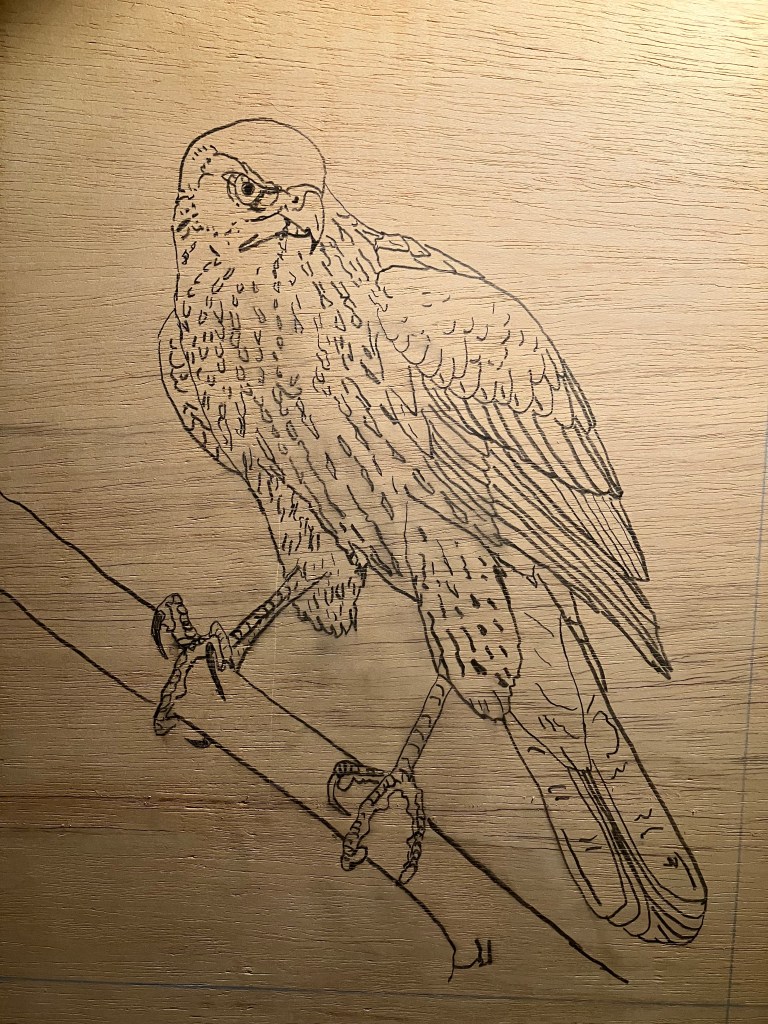
Cooper’s hawk. Astur cooperii.

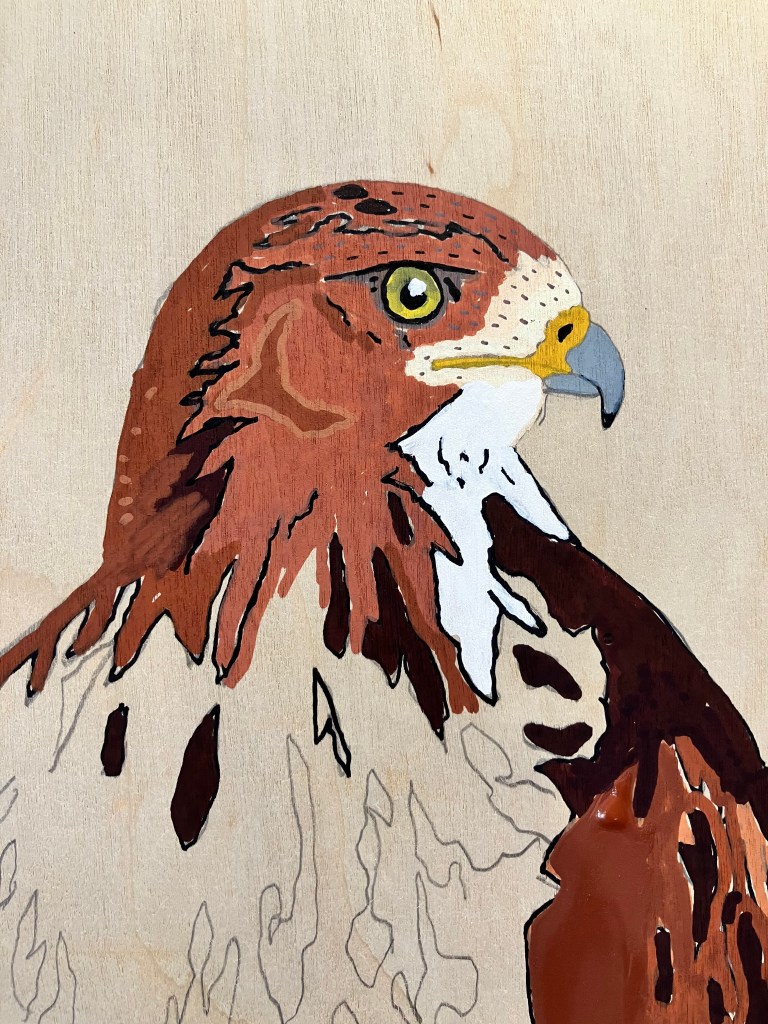
One of my favorite North American birds of prey to watch or illustrate due to their tenacity and ferocity while hunting.  

A Cooper’s Hawk catches small and medium size birds with its feet and kills it by repeated squeezing. Cooper’s Hawks hold their catch away from the body until it dies. They’ve even been documented drowning their prey, holding it underwater until it stops moving.

This bird was recently reclassified from the Accipiter genus to Astur. Grouped with the American Goshawk (Astur atricapillus). This was all brought to be from new genetic research and published last year. 

I hand built this panel in my garage and arranged the composition using pencil and acrylic paint and also acrylic paint markers.

Thank you for looking at birds with me.

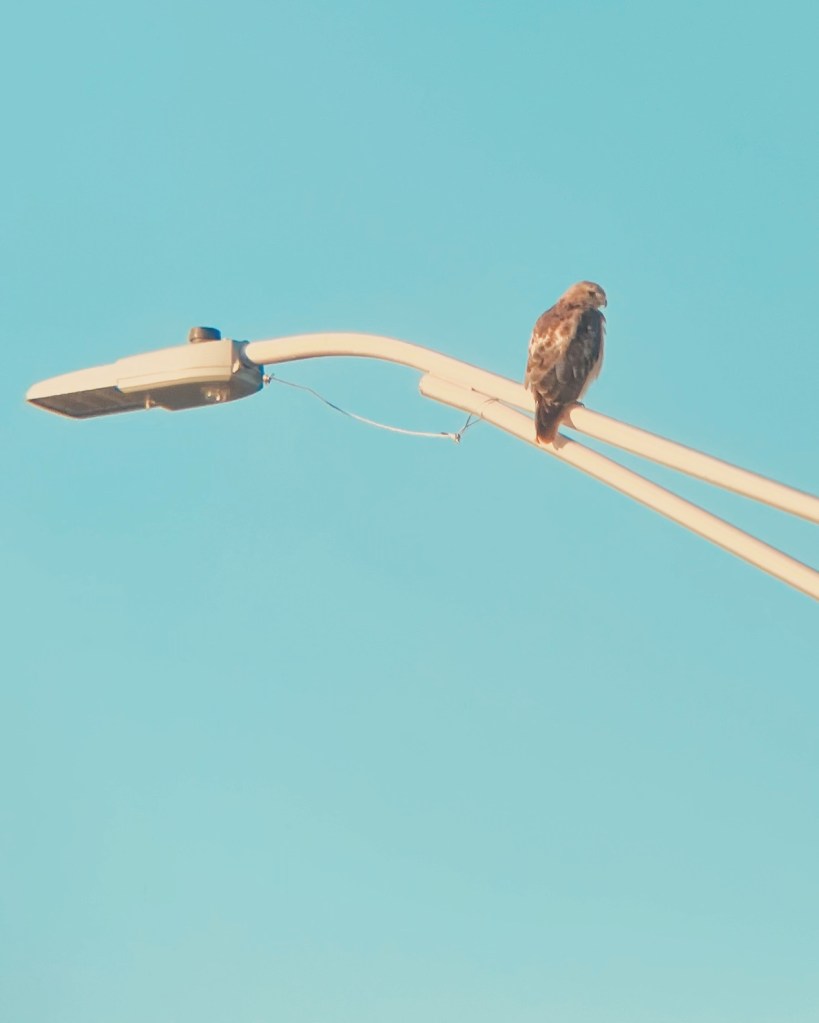
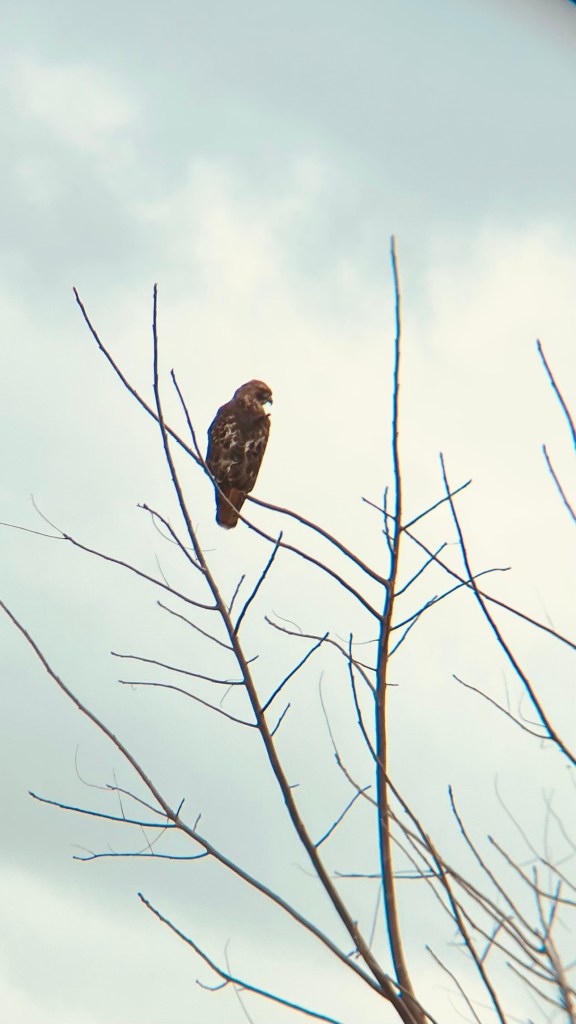
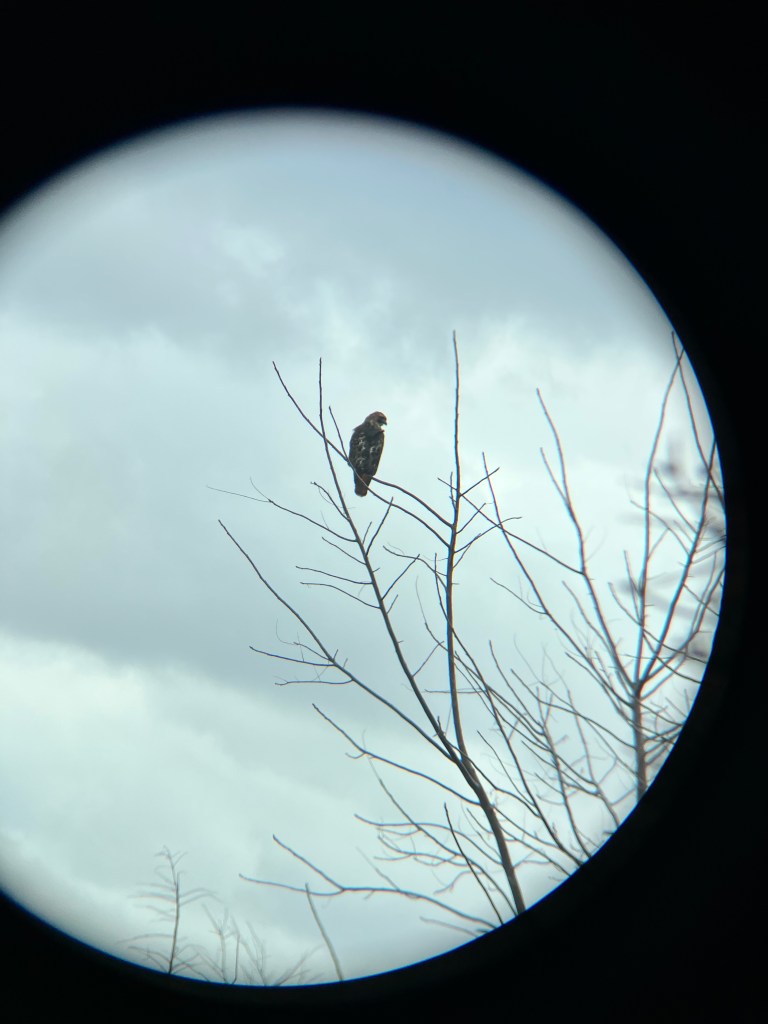
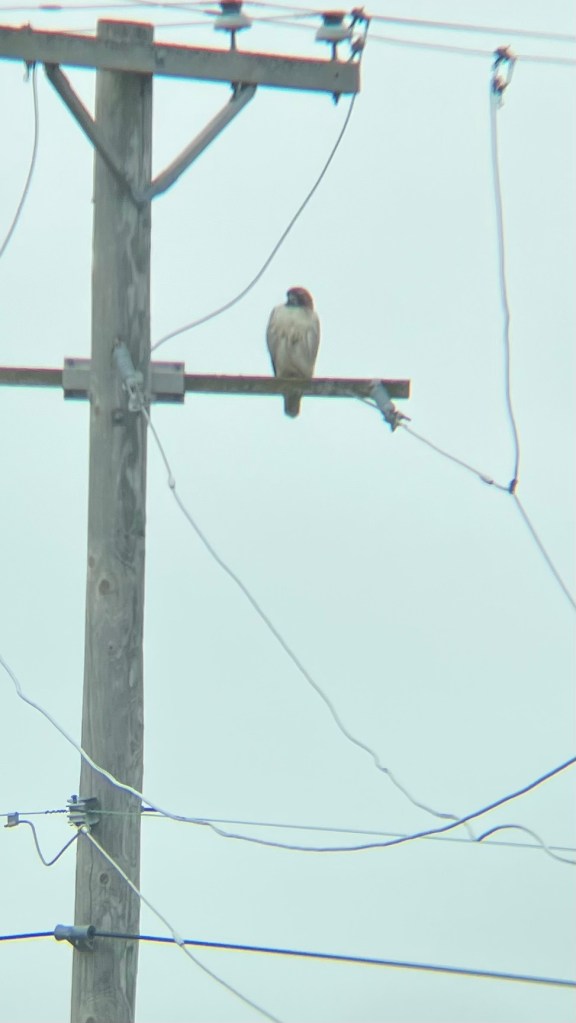
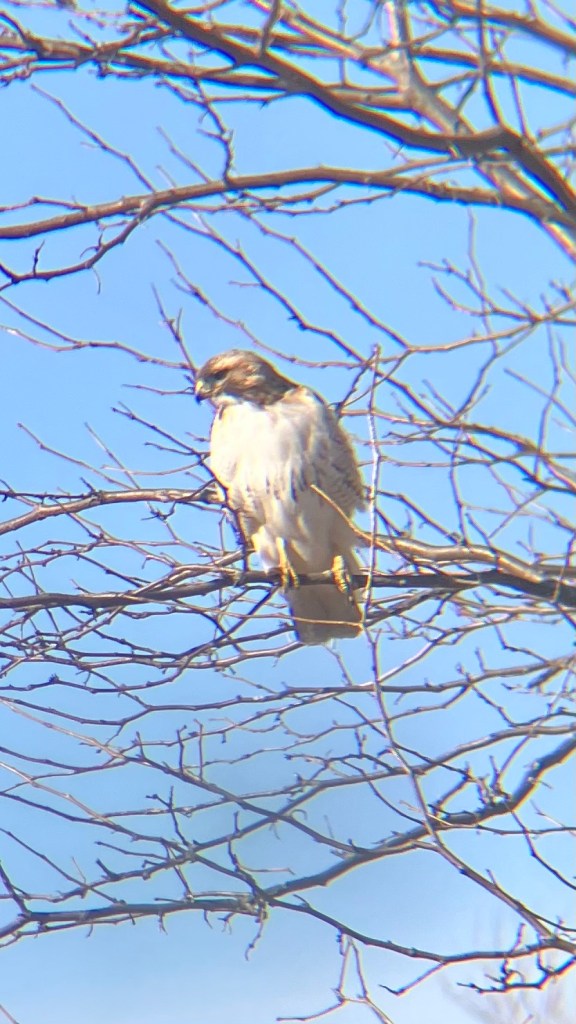
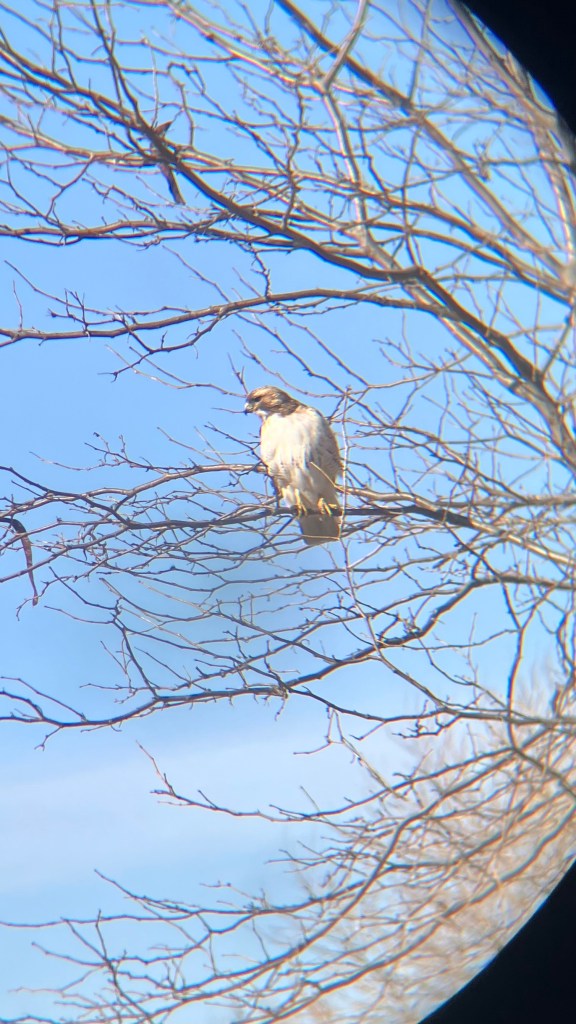
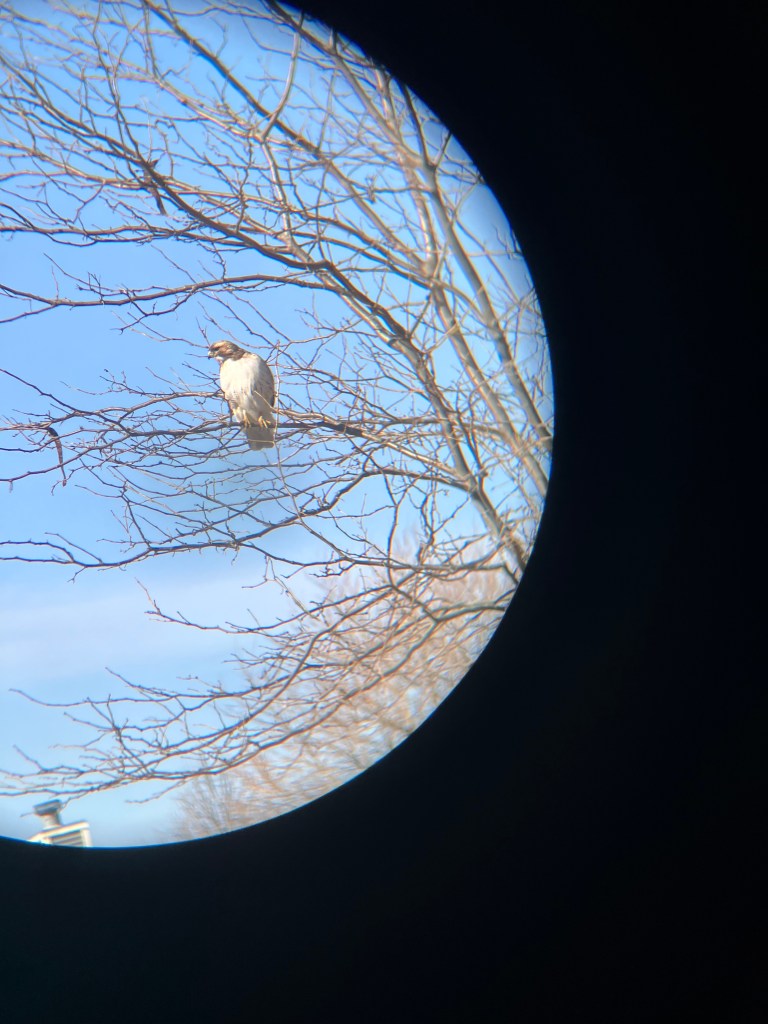
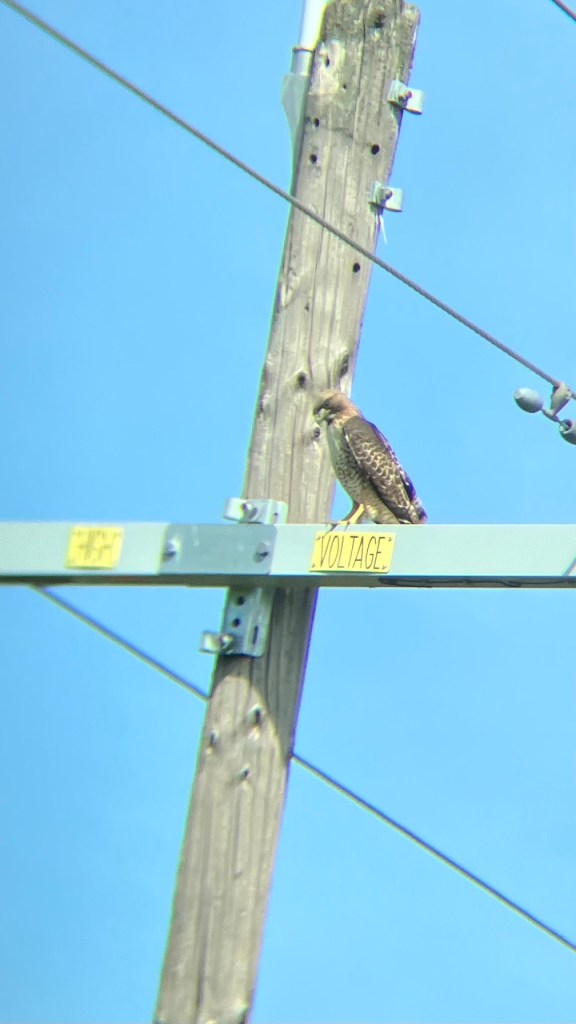
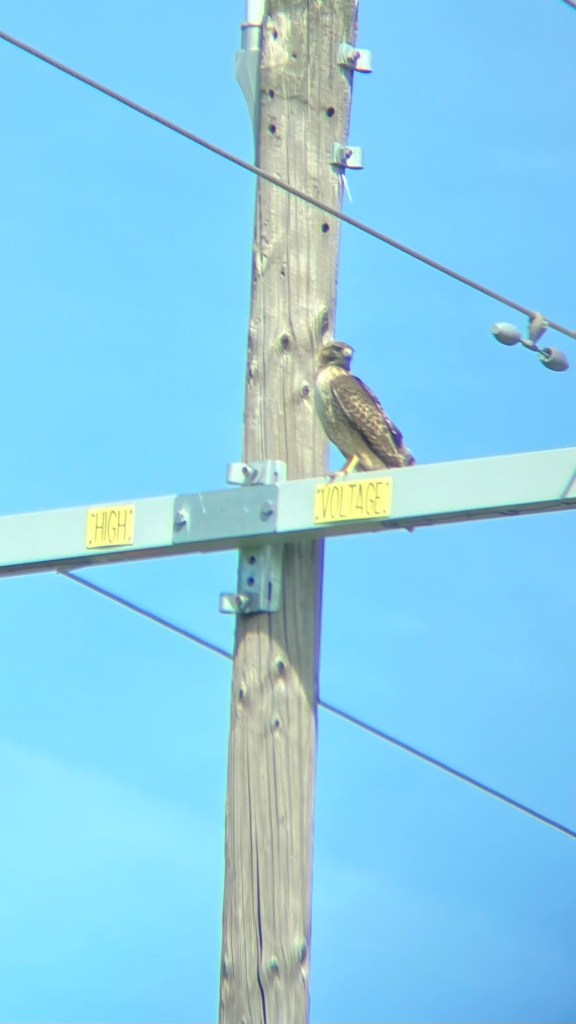
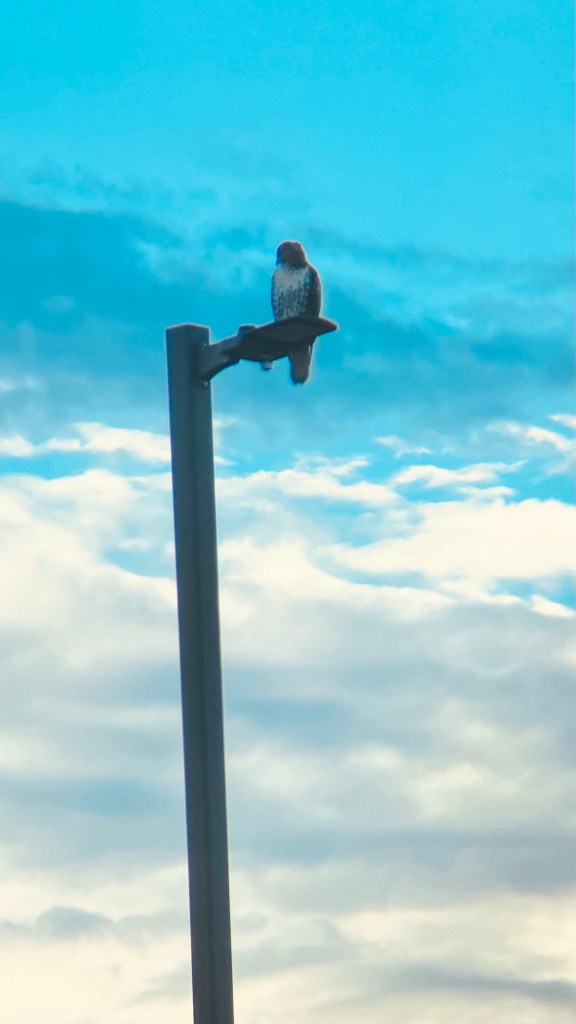
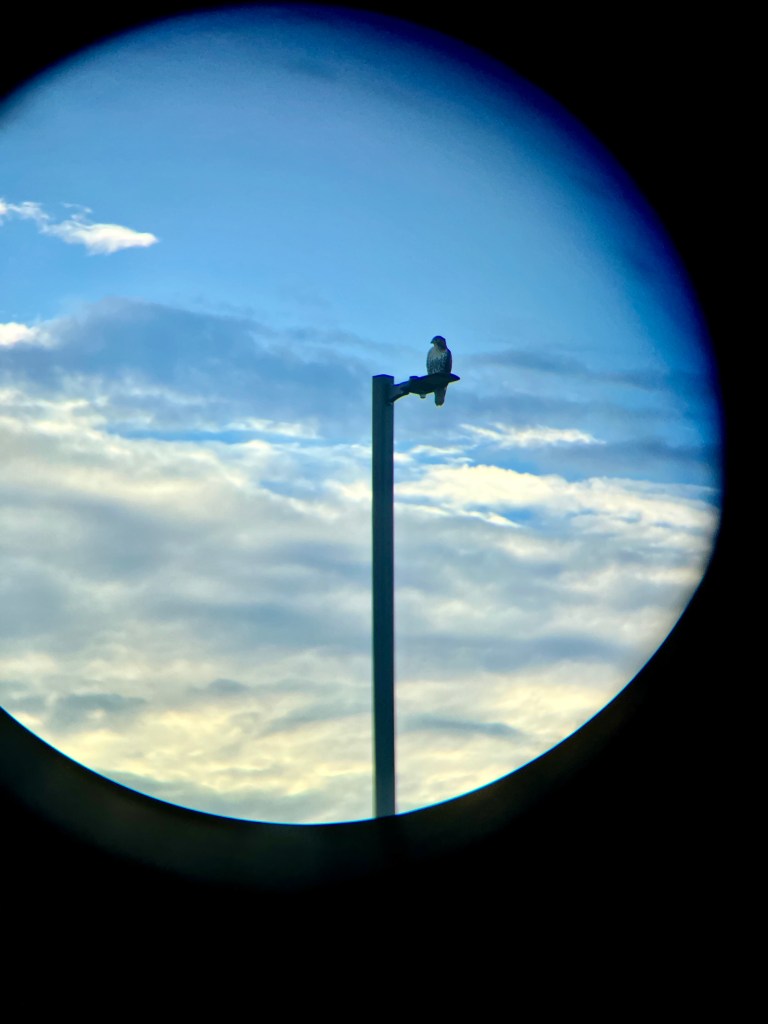
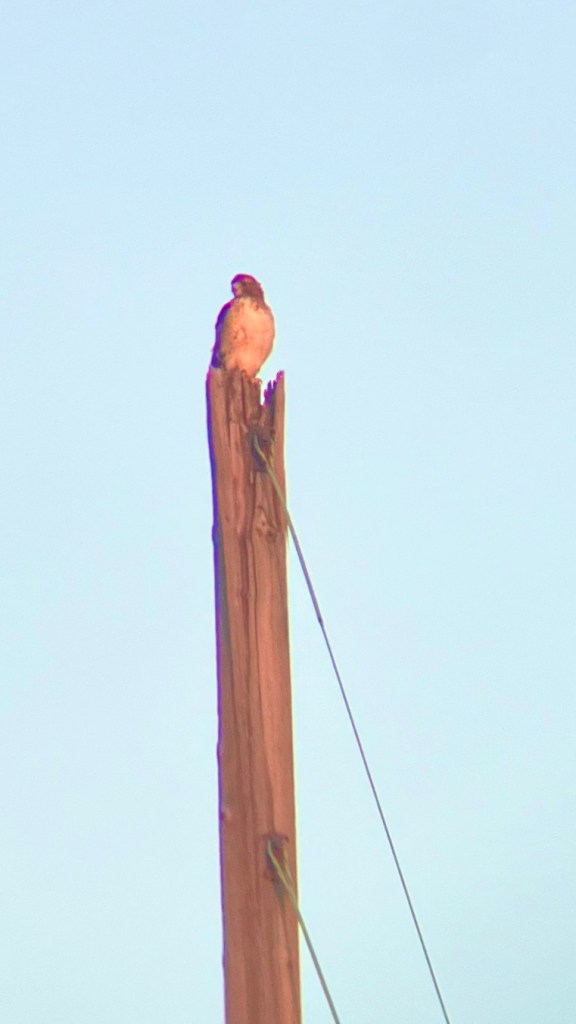
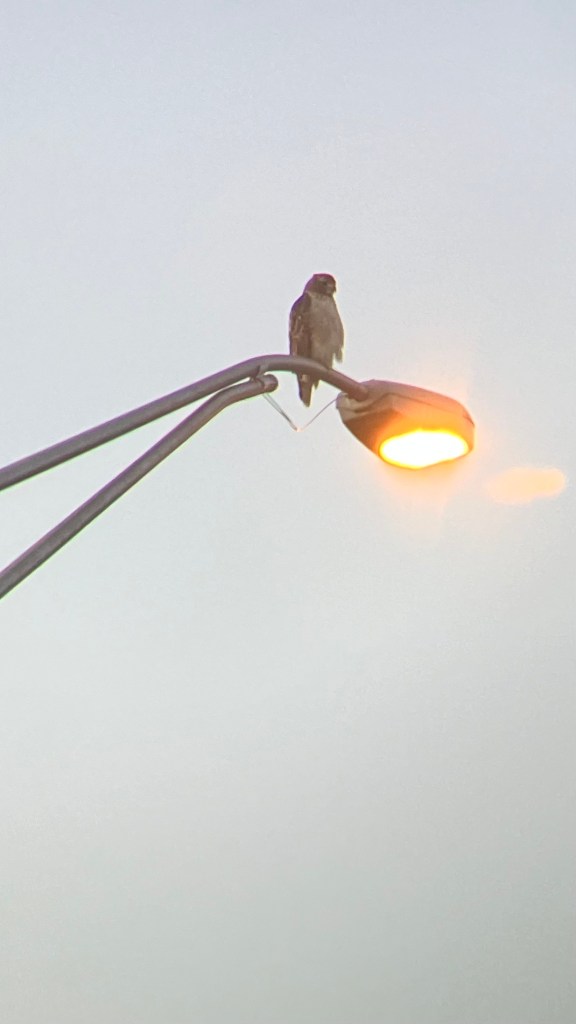
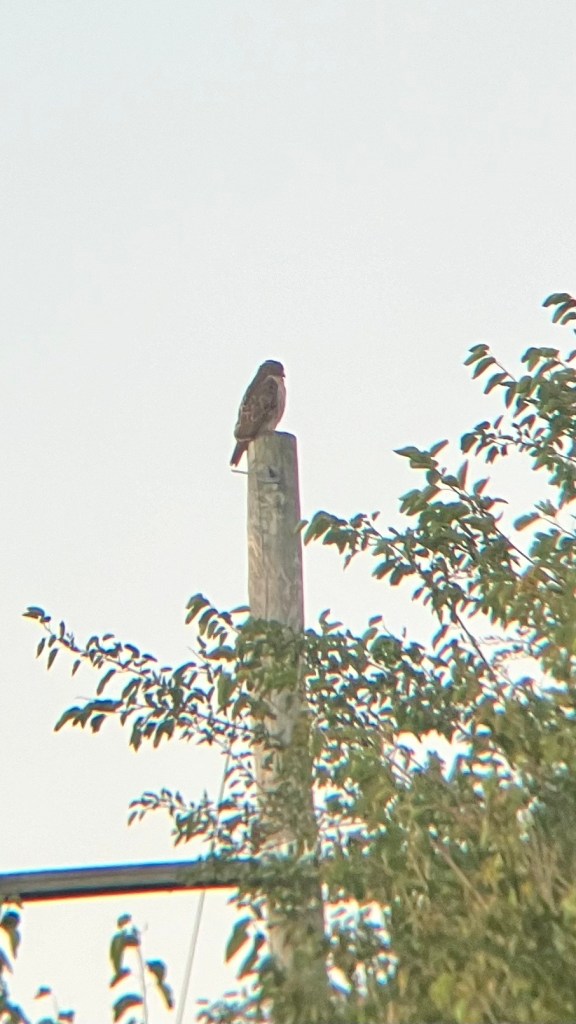
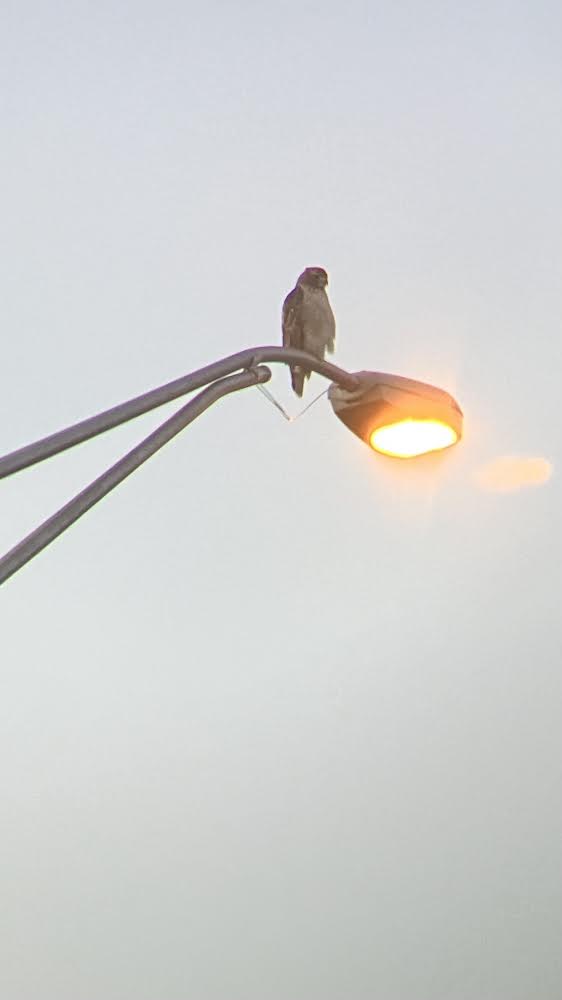
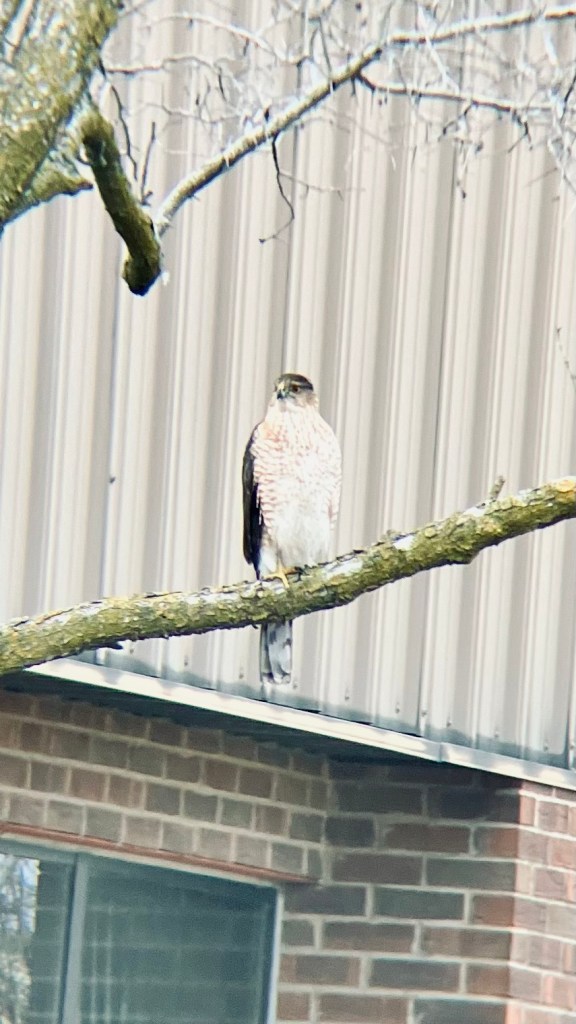
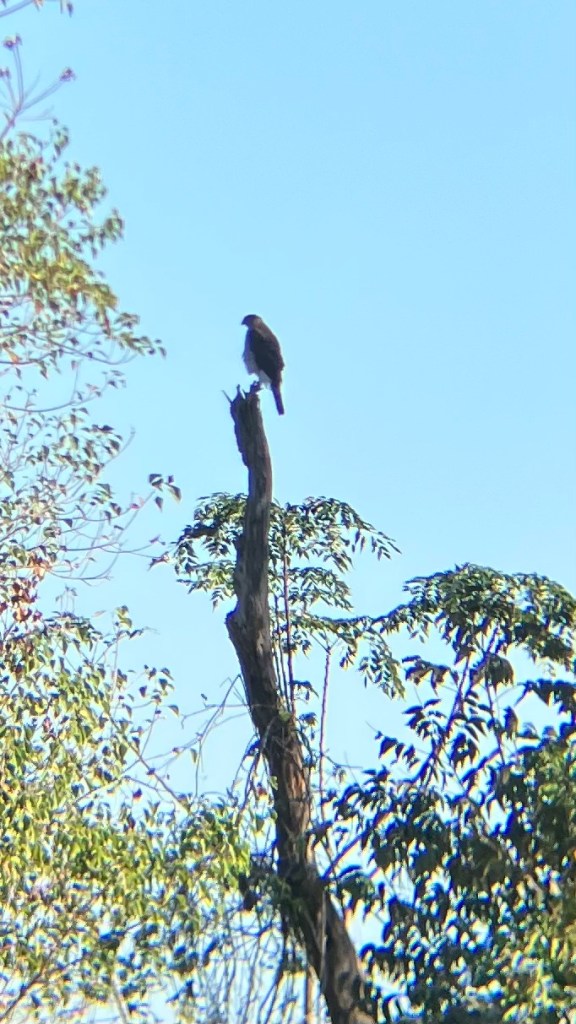
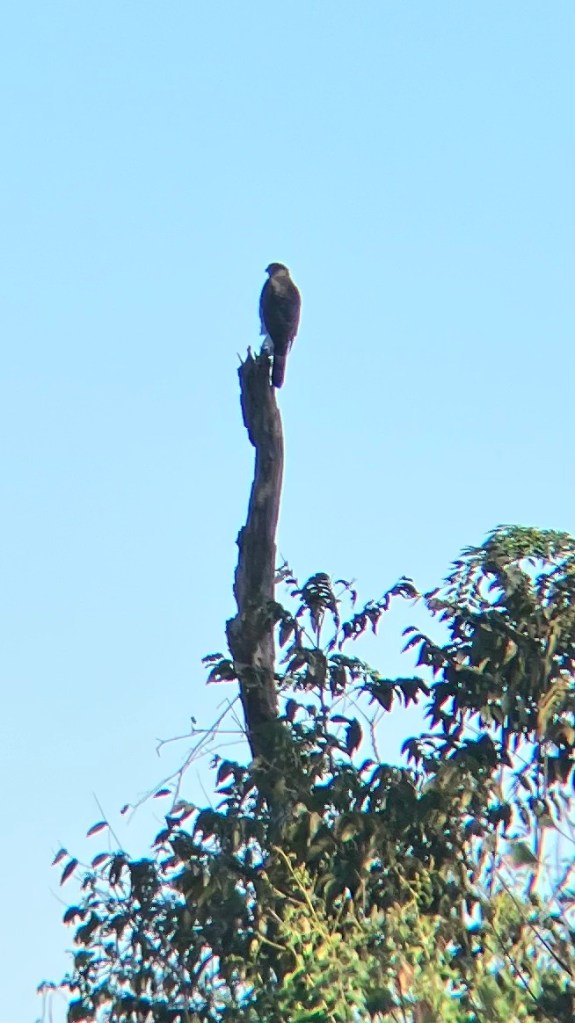
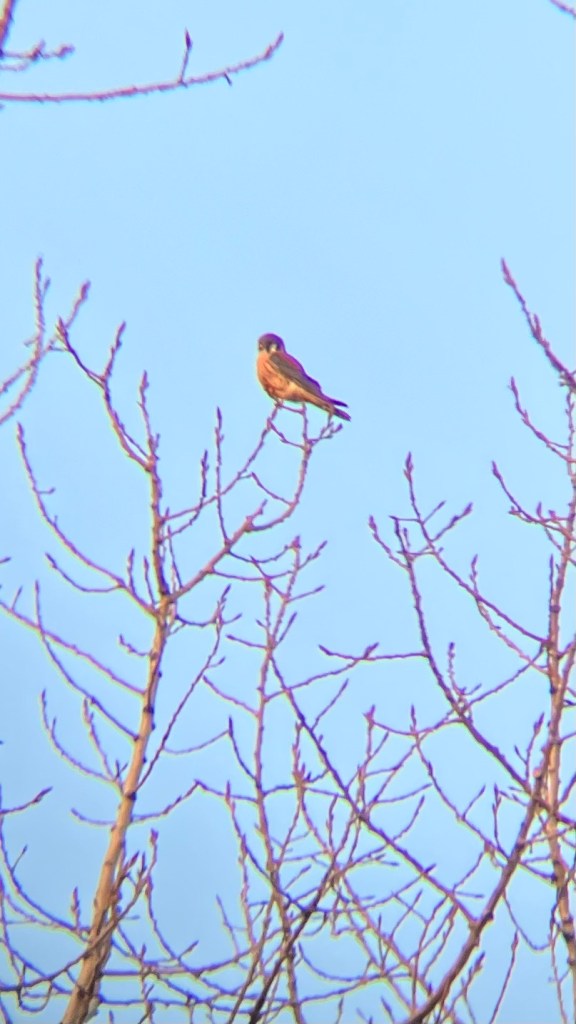
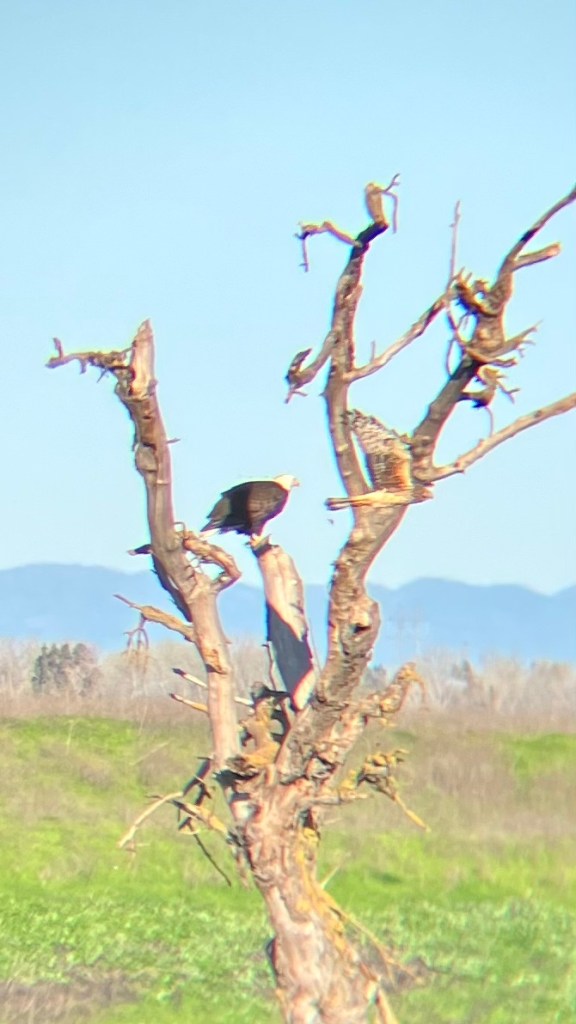
Raptor snapshots from the field.

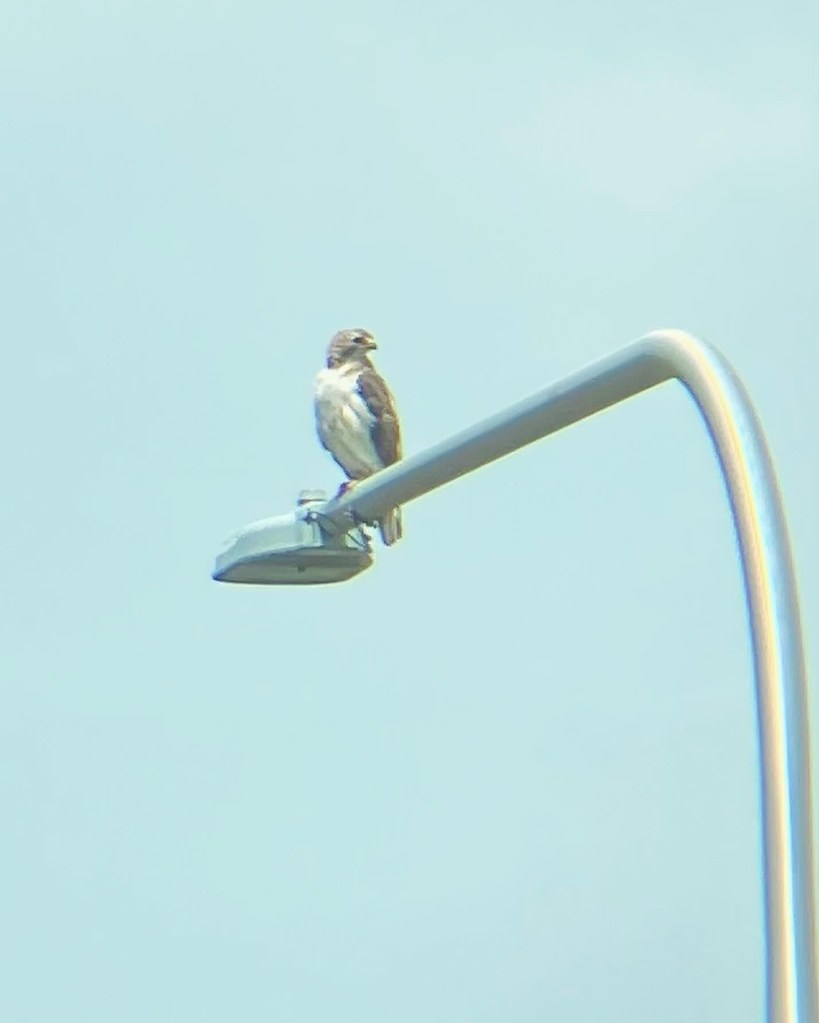
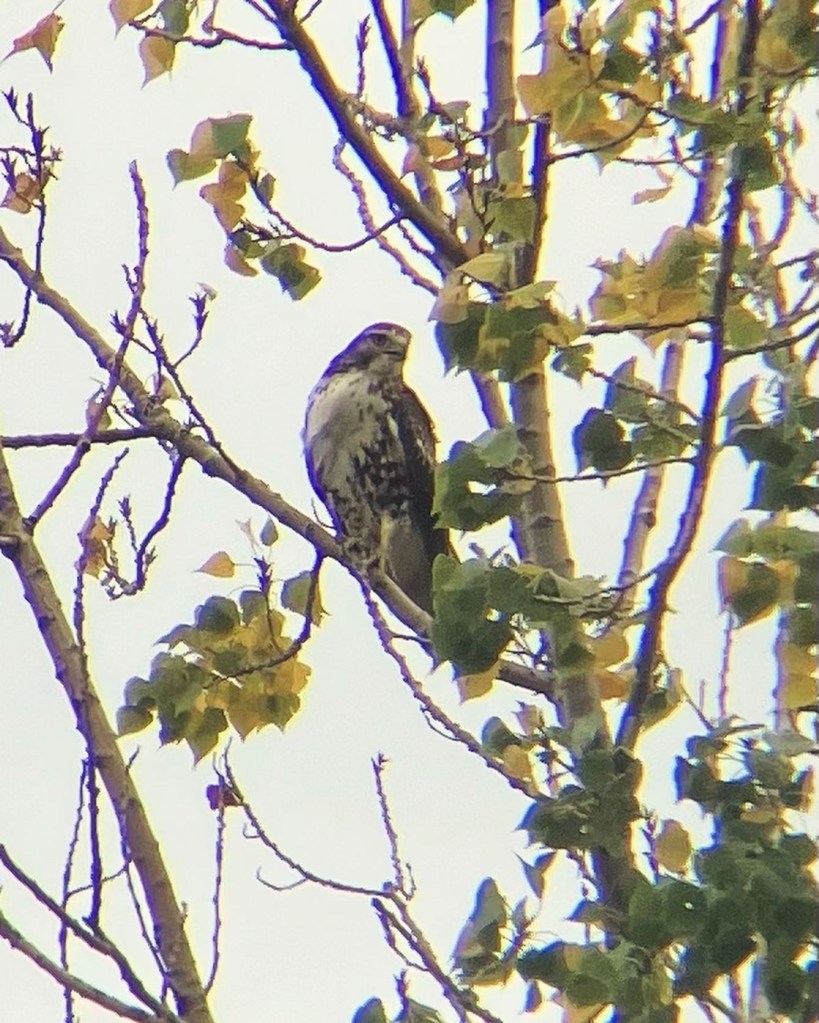
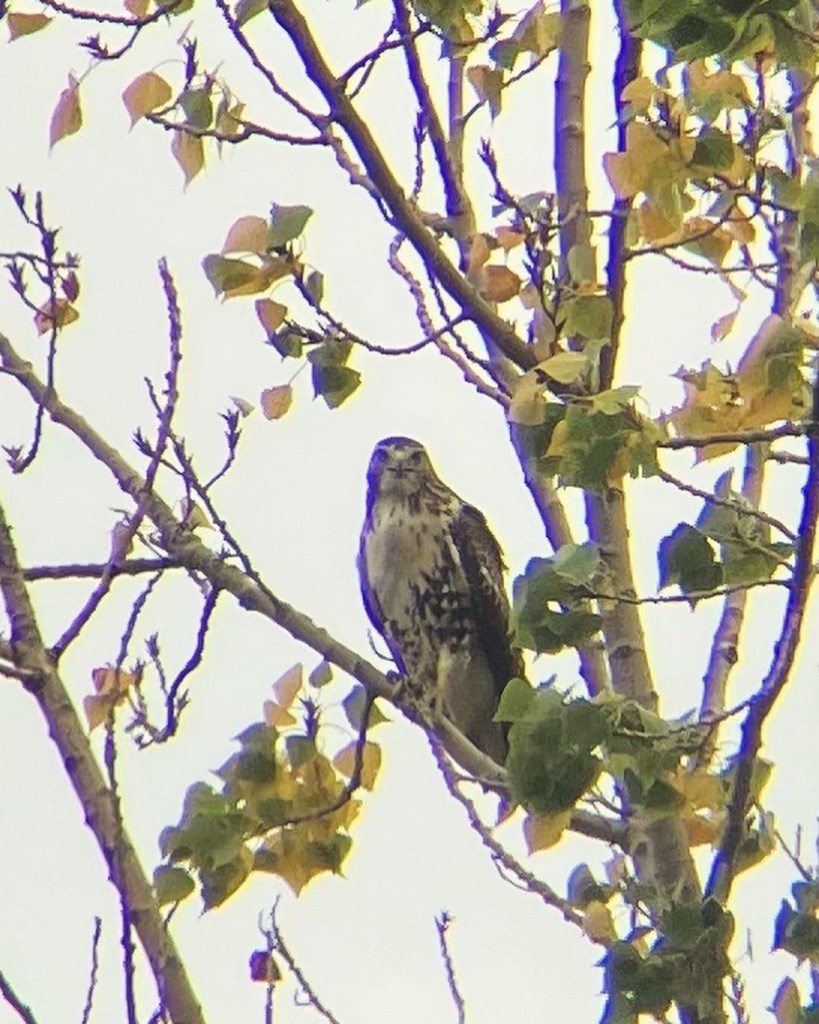
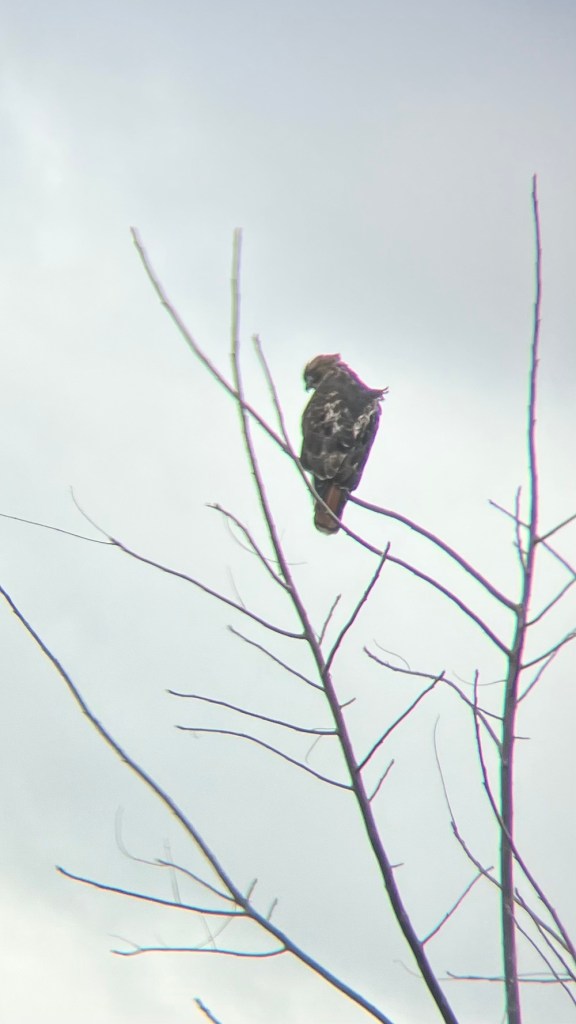
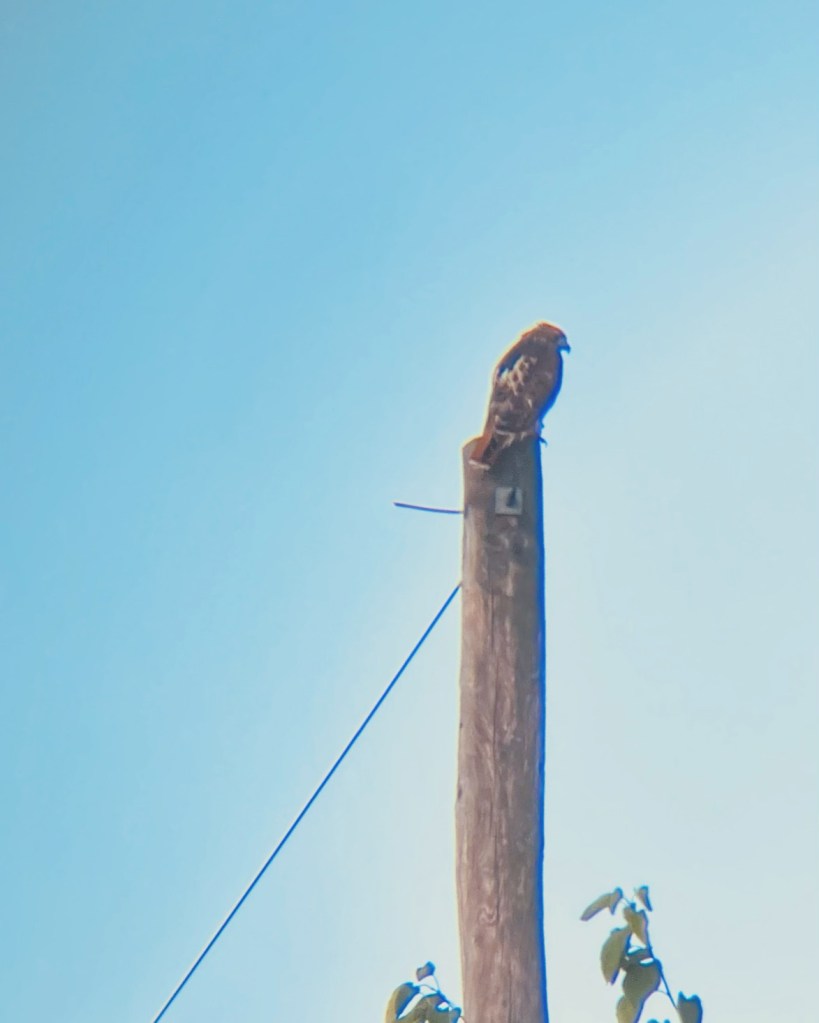
It has been a very great personal journey to learn to paint all the birds I’ve shared here. My journey began more than a decade ago here with learning to paint the Red-tailed Hawk. In the last year I’ve picked up a very basic spotting scope and have (with luck) been able to catch some reasonably decent photographs of those original favorite birds of mine. 

Here’s a series of photographs that I’ve taken in Illinois and California. 

And here’s a few of the Cooper’s hawks I’ve managed to snap a picture of in Illinois and South Carolina. 

And just a few other raptors I’ve spotted in Illinois and California. American kestrel, Bald Eagle, and Northern Harrier.

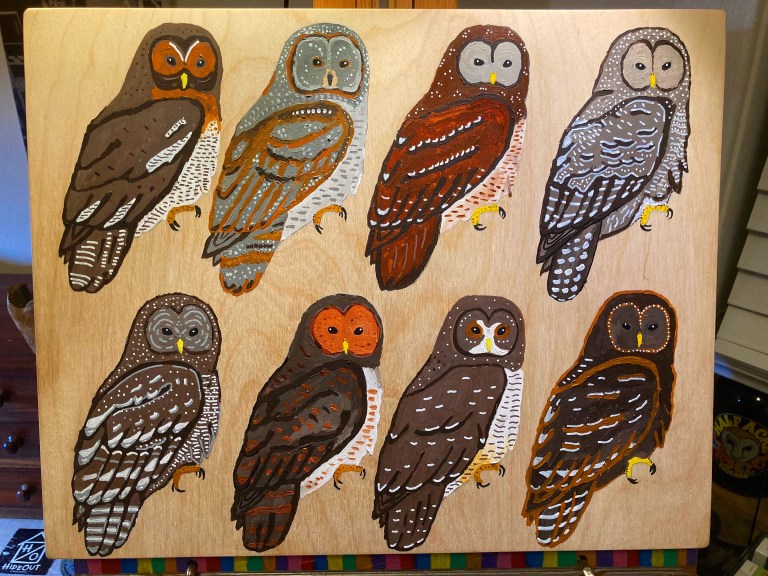
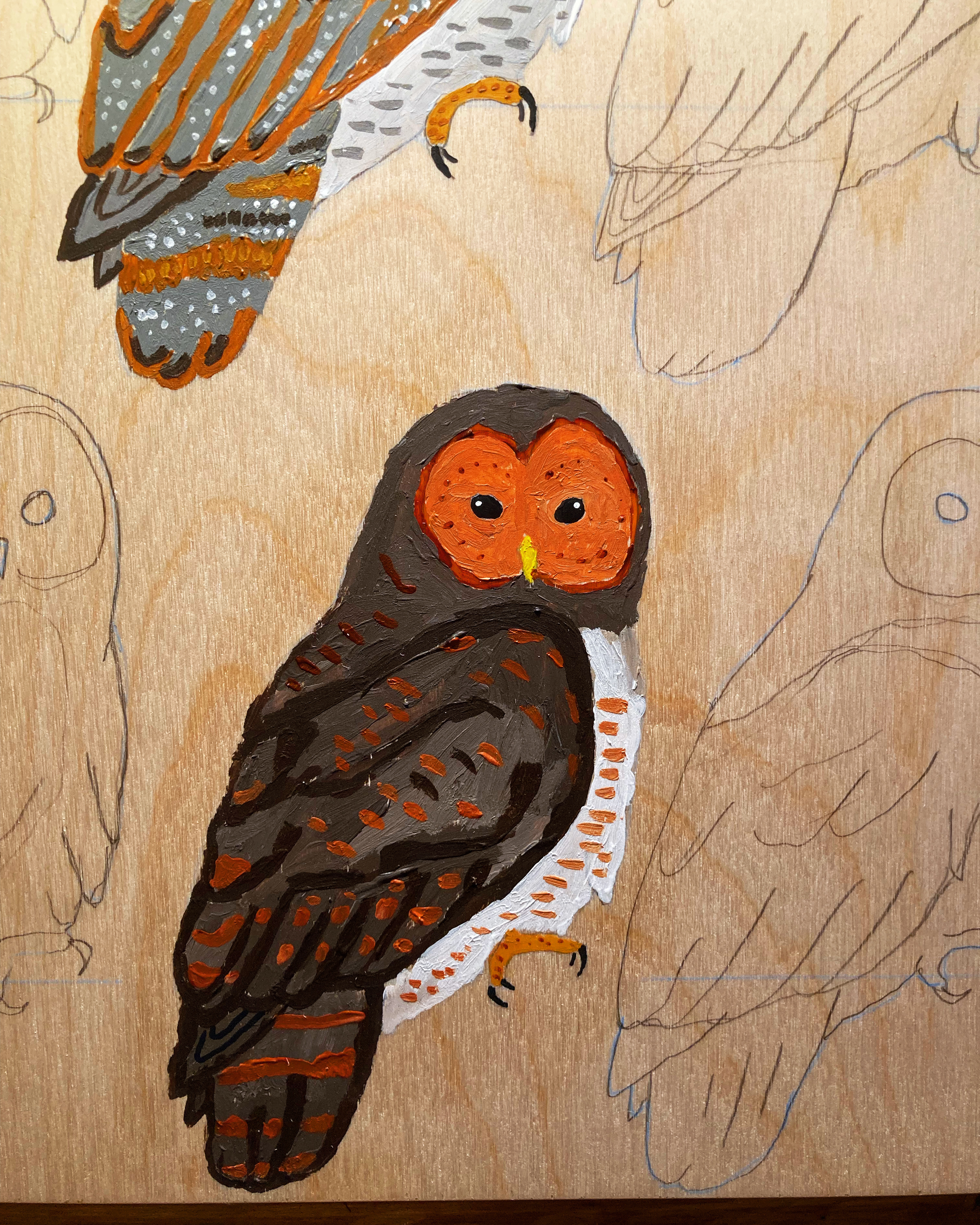
Owls of the World: Wood Owls (Genus: Strix)

This collection of owls of the Strix genus comes from all across the world. These owls of forested regions feed primarily on small mammals, amphibians, and insects. 

From left to right, Top row: Brown Wood Owl (Strix leptogrammica), Mottled Wood Owl (Strix ocellata), Fulvous Owl (Strix fulvescens), Spotted Owl (Strix occidentalis).

Bottom row: Barred Owl (Strix varia), Rufous-Banded Owl (Strix albitarsis), Rufous-Legged Owl (Strix rufipes), Ural Owl (Strix uralensis).

Thank you so much for looking at birds with me.

Falcons of the World: Bat Falcon & Orange-Breasted Falcon

Falco rufigularis & Falco deiroleucus. 

These two similar birds are found in forested areas and near rocky outcroppings across regions of Mexico and south throughout Central America and across much of South America. Both birds feed primarily on birds, insects, and reptiles. The primary diet of the Bat Falcon shouldn’t come as a surprise. 

Populations of both of these wonderful species have declined dramatically due to habitat loss. 

Thank you so much for looking at birds with me.

Owls of the World

Tyto alba.

The most widespread species of owl on the planet. They’re found on every continent except Antarctica. The barn owl diet consists primarily of small rodents. Habitats range from forested, urban, and agricultural areas. 

It as a joy to paint a larger portrait after finishing the year-long panel project. To help the light color of the Barn Owl stand out, I used a blue wash on the wood panel. 

Birds of Prey of the World (A Collection)

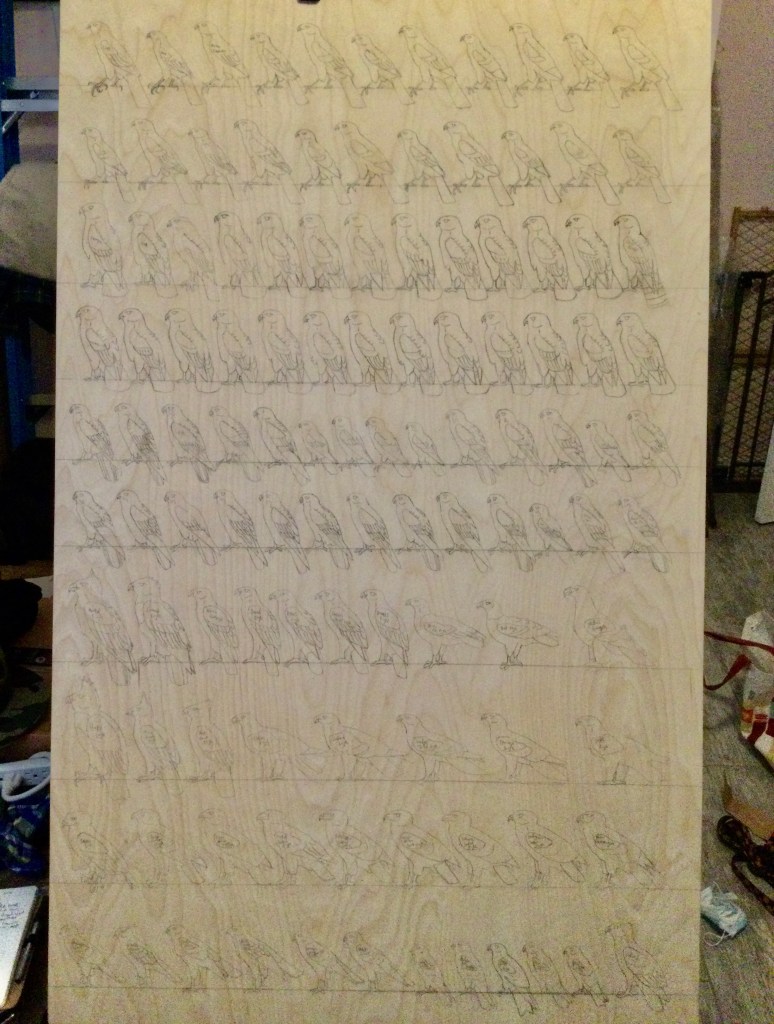
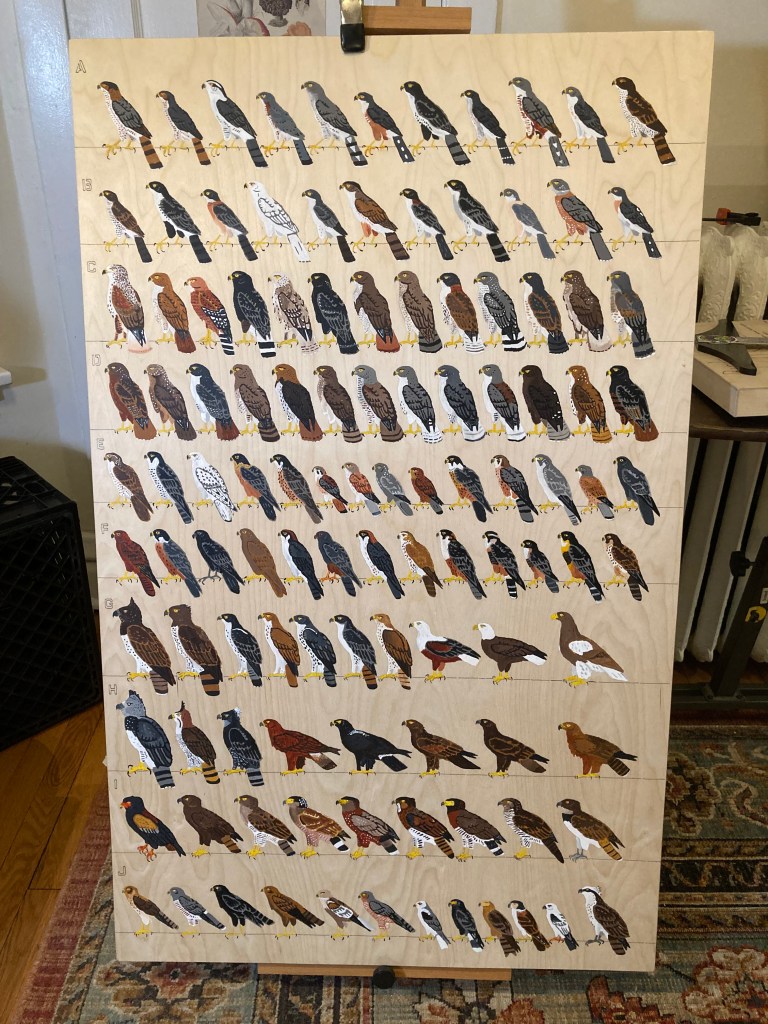
After the last few field-guide inspired panels, I got started on my largest undertaking yet in my 10+ years of exploring birds and painting. I have long wanted to take my love for field guide artwork and layout a large collection of species on one panel. 

My father hand crafted for me this massive (compared to my usual 16×20”) 30” x 40” panel. He handed it off to me in December of 2021 and I began selecting and doing the layout math. 

When selecting the species for this project I came up with a number of species from every continent that birds of prey are found on, that being all but Antarctica. 

It came out to 114 species of birds in all.  

22 hawks from the Accipiter Genus,

26 hawks from the Buteo genus,

27 species of falcons,

18 species of eagles,

9 species of snake-eagles,

6 species of harriers,

5 species of Kites,

And one Osprey. 

I began the pencil work in the first week of February and painting began at the end of March. Then over the course of the following months with acrylic paint I brought to life on the panel all 114 species. 

To call the process a learning experience is an understatement. I poured through dozens of reference photos and books for each and every bird. Getting to know each one as best as I could. 

It’s not just the colors and look of the birds I was after but rather everything I can find on diet, habitats, and range. 

My biggest take away is how connected the world is through its birds. 

The Eleonora’s falcon you watched hunting birds on the shores of a beach in Madagascar today was hunting shore birds in Italy six months ago. (That’s a 4,715 mile flight). 

The Broad-wing hawk you saw in that Canadian forest last summer? It’s spending the winter in Argentina. (A cool 7,085 mile flight). So it stands to reason that habitat loss anywhere in between deeply affects all these birds and their prey animals. 

Aside from all the information I learned about the various species, it was an excellent lesson in patience and enjoying the process. Theres no good way to paint this many species in the detail I want and do it fast.  So I worked slowly and enjoyed the long haul of the undertaking each hour at a time and each feather at a time. 

The mediums I used on this project were pencil, pen, and acrylic paint. 


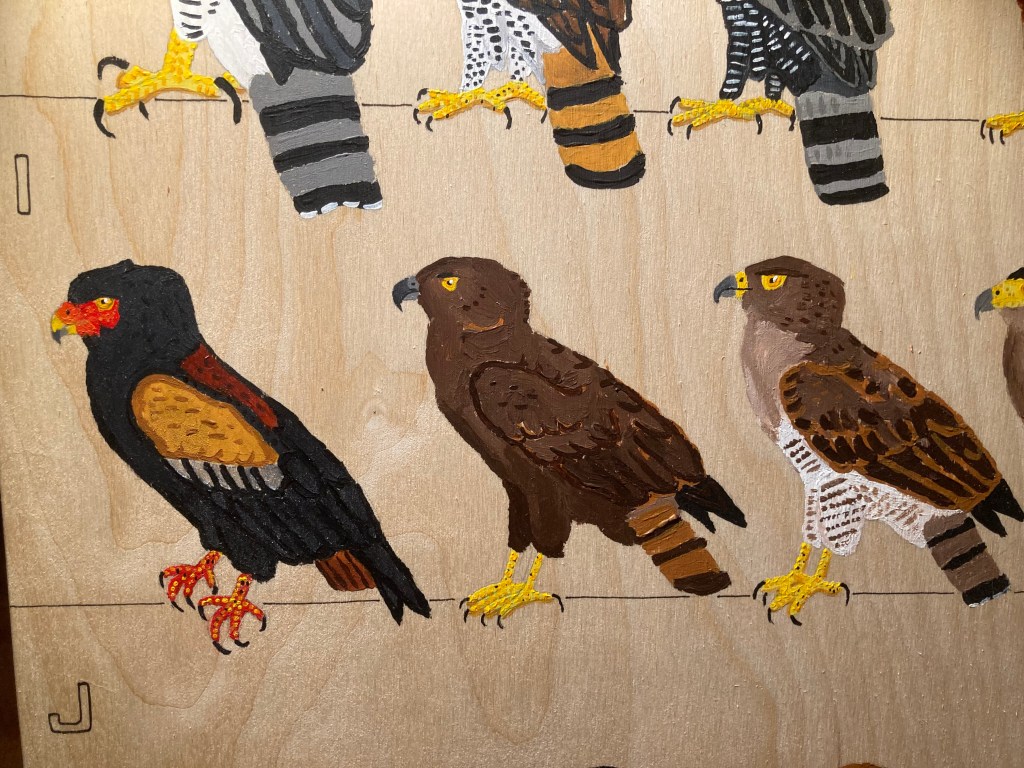
And the master “Who’s Who” list. from left to right:

A: 

Accipiter cooperii, Accipiter striatus, Accipiter gentilis, Accipiter badius, Accipiter ovampensis, Accipiter castanilius, Accipiter melanoleucus, Accipiter minullus, Accipiter tachiro, Accipiter francesiae, Accipiter henstii. 

B:

Accipiter madagascariensis, Accipiter melanochlamys, Accipiter erythrauchen, Accipiter novaehollandiae, Accipiter chionogaster, Accipiter chilensis, Accipiter albogularis, Accipiter poliogaster, Accipiter rufitorques, Accipiter fasciatus, Accipiter trinotatus.

C:

Buteo regalis, Buteo jamaicensis, Buteo lineatus, Parabuteo leucorrhous, Buteo hemilasius, Buteo albonotatus, Buteo ventralis, Buteo platypterus, Buteo albigula, Buteo nitidus, Buteo brachyurus, Buteo lagopus, Rupornis magnirostris.

D:

Buteo augur archeri, Buteo solitarius, Buteo augur, Buteo brachypterus, Buteo auguralis, Buteo swainsoni, Buteo ridgewayi, Buteo poecilochrous, Buteo exsul, Buteo polyosoma, Buteo galapagoensis, Buteo oreophilus, Buteo rufofuscus.

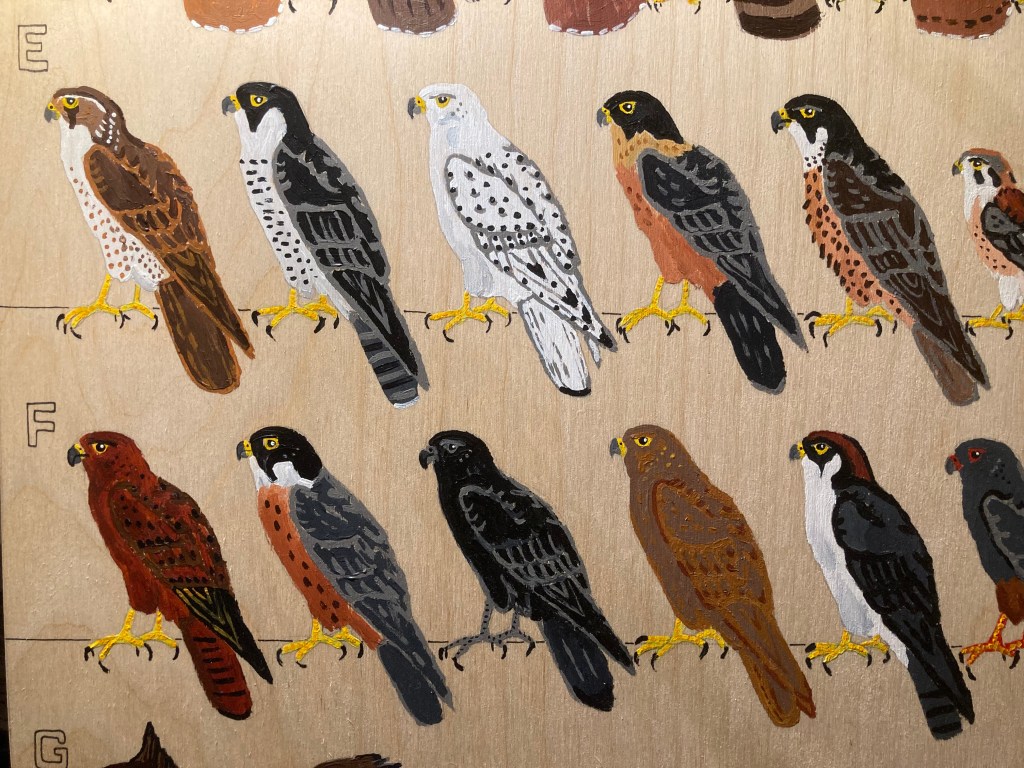
E:

Falco mexicanus, Falco peregrinus, Falco rusticolus, Falco cuvierii, Falco eleonorae, Falco sparverius, Falco cenchroides, Falco ardosiaceus, Falco moluccensis, Falco subbuteo, Falco columbarius, Falco hypoleucos, Falco tinnunculus, Falco concolor

F:

Falco alopex, Falco longipennis, Falco subniger, Falco berigora, Falco chicquera, Falco biarmicus, Falco jugger, Falco cherrug, Falco fasciinucha, Falco femoralis, Falco rufigularis,  Falco deiroleucus, Falco novaeseelandiae

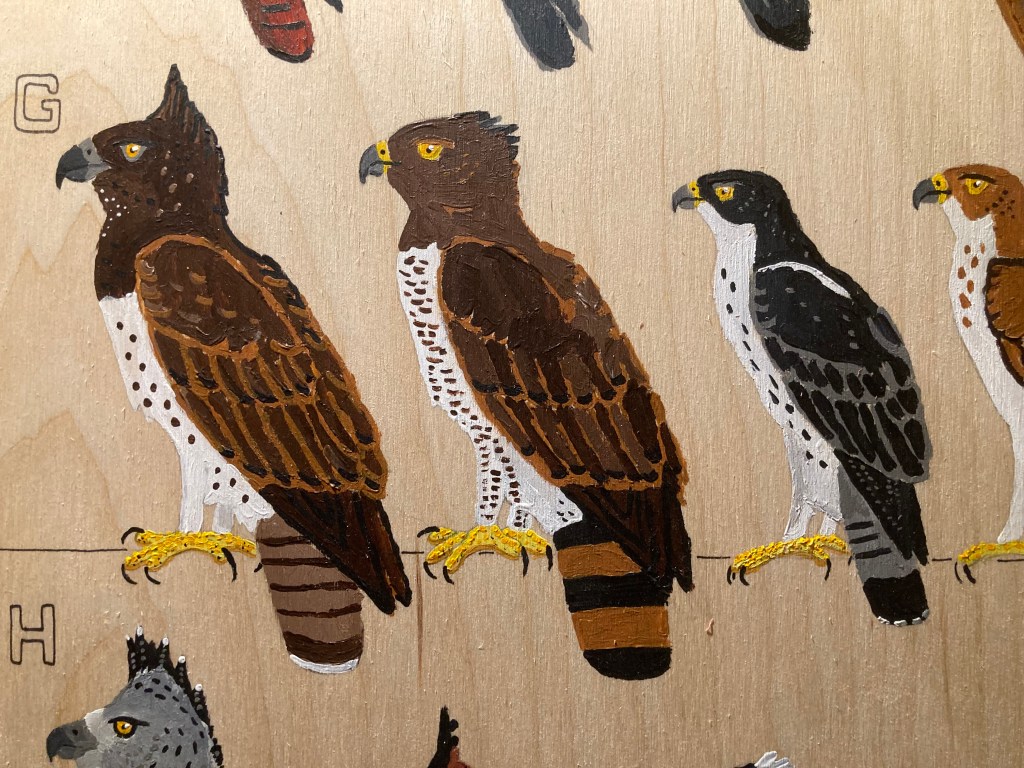
G:

Polemaetus bellicosus, Aquila spilogaster, Hieraaetus pennatus, Hieraaetus ayresii, Aquila africana, Aquila fasciata, Haliaeetus vocifer, Haliaeetus leucocephalus, Haliaeetus pelagicus. 

H:

Harpia harpyja, Spizaetus ornatus, Spizaetus tyrannus, Aquila chrysaetos, Aquila verreauxii, Aquila audax, Aquila gurneyi, Aquila nipalensis.

I:

Terathopius ecaudatus, Circaetus cinerascens, Circaetus fasciolatus, Spilornis cheela, Spilornis holospilus, Dryotriorchis spectabilis, Spilornis rufipectus, Eutriorchis astur, Circaetus pectoralis. 

J:

Circus hudsonius, Circus cinereus, Circus maurus, Circus ranivorus, Circus aeruginosus, Circus assimilis, Elanus leucurus, Royrhamus socrabilis, Lophoictinia isura, Gampsonyx swainsonii, Ictina mississippiensis, Pandion haliaetus.

Thank you so much for looking at birds with me.

So many more to come. 

My two primary reference books were:

Weick, F., and L.H Brown. Birds of Prey of the World: A Coloured Guide to Identification of All the Diurnal Species Order Falconiformes. Paul Parey, 1980.

Ferguson-Lees, James, and David Christie. Raptors of the World. A & C Black Publishers Ltd, 2010.
Falcons of the World (A collection)

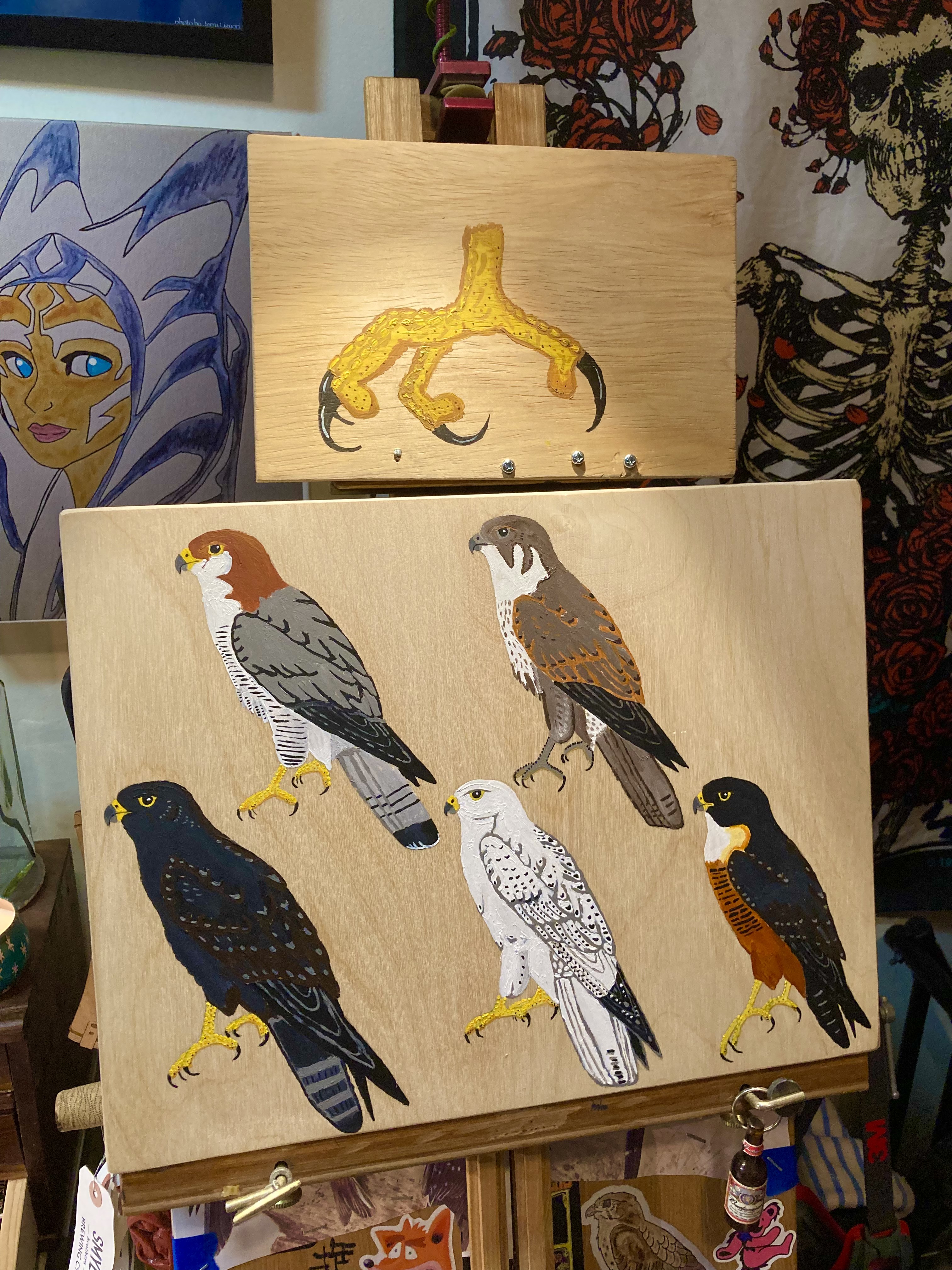
Notable birds of the Falco genus from around the world. From left to right, top to bottom:
Red-Headed Falcon (Falco chicquera). Found in open grasslands of India and Africa. 
Brown Falcon (Falco berigora). Found in a variety of habitats across Australia. 

Eleonora’s Falcon (Falco eleonorae) (Dark morph). A nomadic falcon that moves between the Mediterranean and Madagascar. 

Gyrfalcon (Falco rusticolus). Found along Arctic and subarctic cliffs and coastlines and offshore islands. 

Orange-Breasted Falcon (Falco deiroleucus). Found in tropical and subtropical forests of Central and South America. 

All species maintain a diet composed primarily of birds and occasionally small mammals. Some of the species found in more tropical regions will also feed on insects and reptiles. 

Falcons of the World

Falco novaeseelandiae

I’ve been looking forward to revisiting this member of the Falco genus for a while. The New Zealand Falcon (Falco novaeseelandiae). New Zealand’s only species of falcon.  

This medium size bird of prey feeds primarily on birds, small mammals, reptiles, and insects. It most often hunts from a perch or from a high circular flight pattern diving to take prey. Like most falcons, prey is caught with talons and then dispatched with a bite to the neck/spine (unless it’s insects because that’s just like eating popcorn). 

This falcon was originally found exclusively in native forests and dense brush. However with extensive deforestation they have adapted to open grasslands and agricultural areas. 

A big thanks to my dad for this excellent wood panel to work on and thanks to you all for looking at birds with me.